

Virat Kohli’s New ODI Batting Approach: How He Is Unlocking Another Gear Ahead of 2027
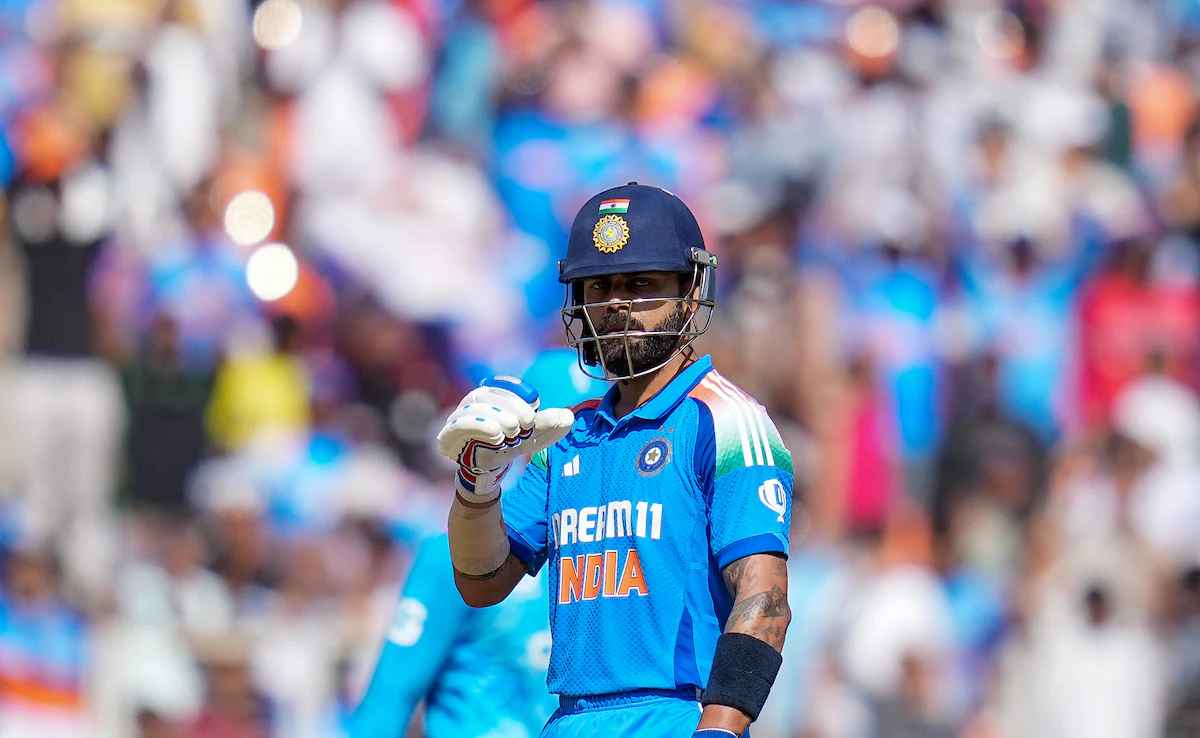
Virat Kohli has spent nearly two decades establishing himself as one of the greatest batters in ODI cricket. With more than 15,000 runs in the format, there is little left for him to prove in terms of consistency, records or match-winning performances. Yet, at 37, Kohli appears to be working on another version of his batting.
The most interesting part of this development is not simply the number of runs he has scored recently. It is the way he is scoring them.
Since India’s ODI series against South Africa in November 2025, Kohli has combined his trademark consistency with a considerably more aggressive approach. He is attacking pace earlier, taking on spin more frequently, using his feet against fast bowlers and clearing the boundary with greater regularity.
His unbeaten 139 against West Indies in the first ODI in Thiruvananthapuram was another example of this transformation. The innings also helped him become only the second batter in ODI history to reach 15,000 runs.
After the match, Kohli spoke about the challenge of raising his game at this stage of his career.
“I’ve got a challenge at this stage of my career to kind of up the ante and play a gear or two higher.”
That statement offers an interesting insight into his current mindset. Virat Kohli is not trying to abandon the batting method that made him successful. Instead, he is finding ways to use it more aggressively, particularly during the early stages of an innings.
For Indian cricket, this development could be particularly important as the team looks towards the 2027 ODI World Cup.
Virat Kohli’s ODI Transformation: From Consistency to Aggression
Kohli’s transition into a one-format international cricketer did not begin smoothly.
After retiring from Test cricket in May 2025, he started his new phase with two consecutive ducks during India’s ODI tour of Australia in October. It was the first time in his ODI career that he had been dismissed for zero in consecutive innings.
He managed to recover something from the series in the final match, but a more significant change became visible during India’s home series against South Africa the following month.
Since that series, Kohli has scored 854 runs in 12 innings at an average of 85.40 and a strike rate of 117.63.
His last ten innings, following the unbeaten 139 against West Indies, accounted for 825 runs. Only six ten-innings sequences in ODI history have produced more runs.
Two of those six sequences also belong to Kohli, highlighting that this level of run-scoring is not entirely new for him. He previously achieved comparable stretches in 2012 and 2018.
However, the difference in his current batting is the pace at which he is accumulating those runs.
Kohli’s best 10-innings run-scoring sequences in ODI cricket
| Batter | Runs | Period | Average | Strike Rate | 100s/50s |
| Virat Kohli | 995 | Feb-Oct 2018 | 142.14 | 103.97 | 5/3 |
| Shubman Gill | 894 | Jan-Sep 2026 | 127.71 | 119.52 | 3/5 |
| David Warner | 857 | Oct 2016-Jun 2017 | 85.70 | 114.42 | 5/0 |
| Virat Kohli | 850 | Feb-Jul 2012 | 106.25 | 100.24 | 5/2 |
| Babar Azam | 837 | Jul 2021-Aug 2022 | 93.00 | 94.36 | 4/5 |
| Ross Taylor | 834 | Jan 2018-Jan 2019 | 104.25 | 91.85 | 3/5 |
| Virat Kohli | 825 | Nov 2025-Sep 2026 | 103.13 | 116.86 | 4/4 |
The numbers underline two things. First, Kohli has returned to the kind of sustained run-scoring that has defined his career. Second, his current strike rate is considerably higher than during his previous high-scoring phases.
This is where his latest transformation becomes more interesting from a cricketing perspective.
Three Phases That Explain Kohli’s Changing ODI Game
To understand Kohli’s recent performances, it helps to divide his ODI batting in the 2020s into three distinct periods.
The first was his difficult phase in 2021 and 2022. The second began with the 2023 World Cup and continued until India’s Australia tour in 2025. The third started with the South Africa ODI series in November 2025.
The statistical differences between these periods explain how his approach has evolved.
| Period | Innings | Runs | Average | Strike Rate | 100s | 50s |
| 2021-22 | 14 | 431 | 30.79 | 86.90 | 1 | 4 |
| Oct 2023-Australia tour | 24 | 1,172 | 61.68 | 87.79 | 4 | 9 |
| Since Nov 2025 | 12 | 854 | 85.40 | 117.63 | 4 | 4 |
2021-22: A difficult period against pace and spin
The first phase was a genuine low point for Kohli. He managed only 431 runs in 14 innings at an average of 30.79.
His struggles were not limited to one particular type of bowling. Both pace and spin caused difficulties, and his overall numbers reflected a batter who was unable to produce his usual consistency.
2023-25: The return of consistency
From 2023 onwards, Kohli rediscovered his ability to score heavily.
He averaged 61.68 across 24 innings, collecting 1,172 runs with four centuries and nine half-centuries.
His performances against pace were particularly strong. However, his approach against spin involved a different calculation.
Kohli became more consistent against spin in terms of average, but his scoring rate remained relatively conservative. With Rohit Sharma and Shreyas Iyer providing more aggressive options against spin, Kohli frequently played the role of an anchor.
His responsibility was to bat deep, maintain stability and provide the innings with a strong foundation.
That approach was effective, but it also meant that his strike rate did not always reflect the attacking potential of his batting.
November 2025 onwards: A different level of intent
The latest phase has changed that balance.
Kohli has maintained his ability to build substantial innings while increasing the speed at which he scores. His average of 85.40 and strike rate of 117.63 demonstrate that he is no longer relying on a conservative approach to accumulate runs.
In my assessment, this is the most significant aspect of his transformation. He has not sacrificed consistency to become more aggressive. Instead, he has found a way to combine both.
Virat Kohli Is Hitting More Boundaries and Sixes
The most visible difference in Kohli’s ODI batting is his improved boundary-hitting frequency.
For years, Kohli’s greatest strength was his ability to find gaps, rotate the strike and maintain pressure on the bowling side through singles and doubles. He was also capable of clearing the boundary, but six-hitting was not necessarily the defining feature of his batting.
That balance has changed considerably.
During 2021-22, Kohli found a boundary once every 10.2 deliveries. In his latest phase, he is finding one every 7.3 deliveries.
The difference becomes even more striking when we examine his six-hitting frequency.
| Period | Balls per six |
| 2021-22 | 173.5 |
| 2023-25 | 133.5 |
| Since Nov 2025 | 25 |
The latest figure represents a major shift in his scoring method.
Kohli is now hitting a six approximately every 25 deliveries, compared with one every 133.5 balls during the 2023-25 period.
This does not mean he has suddenly become a batter who looks to slog every delivery.
The important distinction is that his aggression remains controlled. He is selecting opportunities to attack while maintaining the balance and technique that have always been central to his batting.
Zaheer Khan highlighted this aspect after Kohli’s century in Ranchi, observing on Cricbuzz Live that Kohli was constantly making an effort to get into position early and attack the bowling without losing his shape.
Dinesh Karthik, who worked with Kohli as his batting coach at RCB, also pointed towards the importance of a stable base.
According to Karthik, that foundation allows Kohli to generate the power and balance needed to clear the infield and play aerial shots.
Karthik also explained how Kohli’s increased IPL tempo and appetite for risk have helped him develop clear patterns for attacking. Repeated success with those shots in the IPL has made them more natural, allowing him to carry the same confidence into ODI cricket.
That is an important observation. Rather than changing his batting technique completely, Kohli appears to have become more comfortable using his existing technique to play aggressive shots.
How Kohli Has Become More Dangerous Against Fast Bowlers
Kohli has traditionally been one of the strongest players of pace bowling. His ability to play drives, work the ball around and punish loose deliveries has been a major part of his ODI success.
What has changed recently is how early he is willing to attack.
One of the most interesting developments is his approach against good-length deliveries.
These are often the most challenging deliveries for a batter because they leave limited time to decide whether to defend, attack or allow the ball to pass.
During 2023-25, Kohli scored at a strike rate of 79.20 against good-length deliveries.
Since November 2025, that number has increased to 111.95.
Interestingly, the proportion of good-length deliveries he attacks has barely changed.
| Metric | 2023-25 | Since Nov 2025 |
| Good-length balls attacked | 48.4% | 48.6% |
| Strike rate on attacking shots | 121.95 | 168.88 |
| Good-length balls defended or left | 27.9% | 11% |
This tells us something important about his batting.
Kohli is not necessarily attacking a significantly larger proportion of good-length deliveries. Instead, he is becoming much more productive when he decides to attack them.
His strike rate on attacking shots has increased from 121.95 to 168.88.
At the same time, the percentage of good-length deliveries he defends or leaves alone has dropped from 27.9% to just 11%.
Rather than allowing those deliveries to become passive parts of his innings, he is increasingly looking to rotate the strike or create scoring opportunities.
From a tactical perspective, this makes him more difficult to contain. A bowler can no longer rely on repeatedly hitting a good length and expecting Kohli to spend several deliveries defending or waiting for a scoring opportunity.
He is finding ways to put pressure back on the bowler without needing to hit a boundary every other ball.
More aerial shots against seam bowling
Another important change is Kohli’s willingness to play more shots in the air.
The proportion of deliveries he hits aerially against seamers has increased from 2.8% in 2021-22 to 17.2% in his most recent phase.
Against good-length deliveries specifically, the increase is from 3.6% to 13%.
This is a substantial change in the way he approaches fast bowling.
For a batter who has traditionally relied heavily on ground strokes and placement, a greater willingness to play aerial shots creates additional scoring options.
It also makes it harder for bowlers to settle into a predictable length.
If Kohli can drive over the infield, attack good-length deliveries and still retain his ability to find gaps along the ground, the fielding captain has fewer straightforward options.
Using his feet to disrupt fast bowlers
Perhaps the most interesting part of Kohli’s new approach is his increased use of the crease.
After Kohli scored 93 against New Zealand in Vadodara earlier this year, Ajinkya Rahane observed on Cricbuzz Live that stepping down the pitch had not traditionally been a regular feature of his batting.
Now, Kohli is doing it more frequently, including in domestic cricket.
The purpose is straightforward: make fast bowlers reconsider their lengths.
During 2023-25, Kohli stepped down the pitch against pacers on just 4.2% of deliveries.
Since November 2025, that figure has increased to 10.1%.
This is a significant tactical adjustment and brings back memories of the younger Kohli from the 2012-13 period.
During that phase, he would frequently use his feet against fast bowlers to find boundaries. One particularly striking example came in Jaipur in 2013, when he used his feet against Australian pacers on 34.2% of the deliveries he faced while scoring a 52-ball century.
There is some similarity between this approach and the way Rohit Sharma has used movement down the pitch to disturb fast bowlers.
However, Kohli’s execution is different.
He is not routinely coming down the track to slog across the line. Instead, he generally uses orthodox drives, with several of his boundaries travelling through the area between extra cover and long-on.
Dinesh Karthik explained why this tactic can be effective. When a bowler repeatedly targets a good length, a batter who can move forward and still guide the ball into gaps forces the bowler to reconsider the delivery length.
That is exactly the type of pressure Kohli is now creating.
Kohli Is No Longer Waiting for the First 20 Balls to Settle
One of the biggest changes in his recent ODI batting is his willingness to attack immediately after arriving at the crease.
Traditionally, Kohli has been comfortable taking time to understand the conditions before accelerating. That approach helped him build long innings and control run chases.
However, his latest numbers suggest that he is now prepared to take the game forward much earlier.
Against pace bowling, Kohli’s strike rate during his first 20 deliveries has increased from 80 in 2023-25 to 109.48 in the latest phase.
His Powerplay strike rate has also moved significantly higher.
| Metric | 2023-25 | Latest phase |
| Strike rate against pace in first 20 balls | 80 | 109.48 |
| Powerplay strike rate | 75.34 | 110 |
These figures show that the change is not limited to the middle overs. Kohli is looking to establish a faster scoring rate from the beginning of his innings.
Vadodara against New Zealand: A clear example
His innings against New Zealand in Vadodara offered a particularly good example of this approach.
India were chasing a target of 301 when Kohli walked in at 39 for 1 during the ninth over.
Instead of taking time to settle, he immediately attacked the bowling and scored 27 off just 20 deliveries, hitting six boundaries.
Meanwhile, Shubman Gill was taking time to settle at the other end.
Kohli eventually scored 93, and India completed the chase with an over remaining.
What makes this innings particularly interesting is the way Kohli approached the situation.
He did not wait for Gill to accelerate or for the partnership to become established before taking responsibility for the scoring rate.
He recognised the opportunity to put pressure on the bowling side and acted accordingly.
After the innings, Kohli explained his thinking:
“If the situation is tricky, I back myself to counterattack rather than just waiting around. Any ball can have your name on it, so there’s no point being passive.”
This statement captures the difference between his earlier approach and the version we are seeing now.
He is not ignoring the risk of getting dismissed. He is simply refusing to allow that risk to prevent him from scoring.
The Cardiff innings against England
Another example came on a difficult Cardiff pitch against a strong England attack in July.
Kohli reached 23 off 20 deliveries around the Powerplay, while Rohit Sharma struggled to time the ball at the other end.
The significance of this innings lies in his willingness to maintain an attacking approach even when the conditions were not particularly easy for batting.
It reinforces the idea that his increased tempo is not dependent entirely on flat batting surfaces.
However, the conditions in South Africa will provide a much more demanding test of how consistently he can apply this approach.
Kohli’s Approach Against Spin Has Also Changed
While his improvement against pace has attracted attention, his evolution against spin could be equally important.
Opposition teams have frequently used spin against Kohli, particularly left-arm spin and leg-spin that turns the ball away from him.
Previously, he often preferred to manage these periods carefully, rotate the strike and avoid taking unnecessary risks.
That approach helped him maintain consistency, but it also restricted his scoring rate.
The latest numbers suggest that Kohli is now taking a more proactive approach.
His share of attacking shots against spin has increased from 49.3% to 57%.
More importantly, his strike rate during the first 20 deliveries against spinners has increased from 80.12 in 2023-25 to 103.64 in the latest phase.
This is not just a change in scoring intent. There are clear differences in how he is using his feet and choosing his shots.
More aerial shots against spin bowling
During 2023-25, only 2.1% of the deliveries Kohli faced from spinners were hit aerially.
In the latest phase, that number has increased to 10.5%.
His use of the feet against spin has also increased considerably.
Previously, he used his feet on just 0.2% of deliveries against spinners. That figure has now risen to 6.8%.
These adjustments provide him with more ways to attack spinners rather than allowing them to control the scoring rate.
The six against Gudakesh Motie in Thiruvananthapuram, which took Kohli to his century, was a perfect illustration.
He came down the pitch, met the ball while moving forward and cleared the boundary.
It was not simply a powerful shot. It demonstrated the confidence to use his feet, commit to the attacking option and execute it against spin.
From a cricketing perspective, this development matters because opposition teams can no longer assume that spin will automatically slow Kohli down during the early stages of his innings.
Why Has Virat Kohli Increased His Batting Tempo?
There is unlikely to be one single reason behind Kohli’s transformation.
Several factors may have contributed to the change, including his mental approach, increased experience in the IPL, the changing responsibilities within India’s batting order and his retirement from Test cricket.
1. Greater freedom in his batting
Kohli has spoken about being in a better mental space and how that has influenced his batting.
His comments after the South Africa series last November were particularly revealing.
After winning the Player of the Series award, he spoke about wanting to take more risks and enjoy his batting.
“When I play freely, then I know I can hit sixes. So, I just wanted to have some fun because I was batting well, just take a bit more risk. Just push my own boundaries and see where we go.”
He also described his century in Ranchi as particularly significant because it had “opened me up” in a way he had not experienced for some time.
These comments suggest that his current approach is not simply about scoring faster. It is also about allowing himself to use more of the attacking options available in his game.
2. IPL experience has influenced his ODI batting
Dinesh Karthik’s observations provide another possible explanation.
Kohli’s increased tempo and appetite for risk in the IPL have helped him develop patterns for attacking bowlers.
When a batter repeatedly practises particular shots and experiences success with them, those options become more natural during matches.
Karthik believes Kohli has been able to transfer that confidence and intent into ODI cricket.
There is an important distinction here.
Kohli has not suddenly developed an entirely new technique. Instead, his experience of playing at a higher tempo in the IPL appears to have influenced how early he is willing to use his existing attacking shots in ODIs.
3. Retirement from Test cricket has removed a format-related constraint
Another major factor is Kohli’s retirement from Test cricket in May 2025.
Before retirement, he had to maintain a batting method that could serve him across different formats.
His comments during IPL 2023 provide an interesting example.
After scoring a century in Hyderabad, with the World Test Championship final approaching immediately after the IPL, Kohli explained:
“I’ve never been a guy who plays so many fancy shots… We’ve got Test cricket coming up after the IPL, have to stay true to my technique.”
That statement highlights how he previously had to consider the demands of Test cricket even while playing in the IPL.
That constraint no longer exists.
Following his retirement, his IPL approach appears to be transferring more directly into his ODI batting.
Ajinkya Rahane made a similar observation after the Thiruvananthapuram ODI, suggesting that the way Kohli had been batting in the IPL over the previous two or three years was now becoming more visible in his ODI performances.
In my view, this is one of the most interesting aspects of his latest phase. His technical foundation remains familiar, but he appears to have greater freedom to use the attacking instincts he has developed in shorter formats.
4. India’s batting responsibilities may have changed
The changing role of Rohit Sharma could also be relevant.
During the 2023-25 period, Rohit was a major Powerplay aggressor for India.
However, he is no longer playing exactly the same role in the opening overs.
As a result, some of the responsibility for establishing the scoring tempo may have shifted towards Kohli, although at a different stage of the innings.
This does not mean Kohli has replaced Rohit’s role. Their batting positions and responsibilities are different.
But it does suggest that India’s middle-order approach may benefit from having Kohli take greater responsibility for acceleration.
5. New playing conditions make early acceleration valuable
There is also a tactical reason behind the importance of scoring quickly during the first half of an ODI innings.
Under the new playing conditions discussed in the analysis, the fielding side continues with only one of its two balls after the 34th over.
As the ball gets softer, batting can become more difficult. The possibility of reverse swing can also give bowlers greater influence during the later overs.
This makes early scoring particularly valuable when batting first.
In Indian day-night matches, the calculation can become even more interesting because dew may make chasing easier later under lights.
Therefore, accelerating earlier can help a team establish a stronger total before the conditions become more favourable for the bowling side.
Kohli’s increased willingness to attack during the first 20 deliveries and Powerplay fits into this broader tactical picture.
Can Virat Kohli’s New ODI Batting Approach Work in South Africa in 2027?
The next major challenge for this version of Kohli will come in conditions different from those in which much of his recent transformation has taken place.
India’s home ODIs since the 2023 World Cup have largely been played on flat pitches offering limited assistance to bowlers.
South Africa presents a different challenge.
The conditions can vary significantly between venues:
- Paarl: Conditions can offer turn.
- Highveld: Bounce can become an important factor.
- Centurion: Batting conditions can be flatter.
There is also greater potential for movement and bounce, which will test Kohli’s ability to adapt his attacking approach.
His improved game against pace should be particularly useful in these conditions.
The ability to attack good-length deliveries, use his feet against fast bowlers and maintain a scoring rate from the beginning of an innings could provide India with valuable flexibility.
However, there is an important point to consider.
A higher strike rate is not automatically the correct approach in every ODI situation.
On a difficult pitch, a batter may need to spend more time at the crease. If conditions favour the bowling side, preserving wickets and building a partnership can become more important than maintaining an aggressive tempo.
Kohli’s greatest strength has always included his ability to understand match situations and adjust his batting accordingly.
Therefore, the real test in South Africa will not be whether he can reproduce a strike rate of 117.63 in every innings.
It will be whether he can recognise when to attack, when to control the innings and when to use his experience to build a match-winning partnership.
After 18 years at the top level, adapting to the demands of a particular day is something Kohli has consistently demonstrated.
His current transformation adds another option to that already extensive batting skill set.
Final Verdict: Kohli’s Technique Has Not Changed, His Intent Has
Virat Kohli’s latest ODI transformation is not about becoming a completely different batter.
His ability to build innings, find gaps, rotate the strike and maintain consistency remains central to his game.
What has changed is his willingness to use those skills more aggressively.
He is attacking good-length deliveries with greater efficiency, playing more aerial shots, using his feet against pace and spin, and taking responsibility for the scoring rate much earlier in his innings.
The numbers support this change. His average of 85.40 and strike rate of 117.63 since the South Africa series show that he is combining substantial run-scoring with a faster tempo.
For Indian cricket fans, the most encouraging part is that Kohli is still looking for ways to improve despite having achieved almost everything an ODI batter could aim for.
At 37, with more than 15,000 ODI runs behind him, he is not simply relying on his reputation or previous success.
He is adjusting his game, expanding his scoring options and finding new ways to influence matches.
Whether this approach delivers the same results in South Africa in 2027 remains to be seen. Conditions, match situations and the quality of opposition bowling will all play their part.
But one thing is already clear: Kohli’s batting has entered another interesting phase.
His technique remains recognisable. His intent has evolved. And that willingness to keep improving, even after 18 years at the top, is perhaps the strongest indication of what makes Virat Kohli such a remarkable ODI batter.

Relevant news
Manvanth Kumar: How Karnataka’s Surprise Ranji Trophy Pick Is Emerging as a Promising All-Rounder
Manvanth Kumar was not expecting to feature in Karnataka's opening matches of the Ranji Trophy…

Australia’s 288-Run Chase: How the Hard Grind Against South Africa Revealed a Winning Blueprint?
Australia have 288 runs to chase against South Africa in the final Test at Cape…
Jasprit Bumrah Chucking Controversy: How He Changed His Bowling Action?
Jasprit Bumrah is known for his unusual bowling action, awkward run-up and ability to generate…

Why Early Cricket Training in India Needs a Rethink?
Vaibhav Sooryavanshi has given Indian cricket fans another remarkable teenage success story. At just 15,…
Mitchell Starc’s Day of Extremes in Cape Town: How Australia’s Fast Bowler Turned the Tide
Mitchell Starc experienced two contrasting spells on the same day in Cape Town. First, South…
Harpreet Brar’s seven-year IPL wait for a settled role
For seven IPL seasons, Harpreet Brar has remained one of Punjab Kings' few constants. The…