

Harpreet Brar’s seven-year IPL wait for a settled role
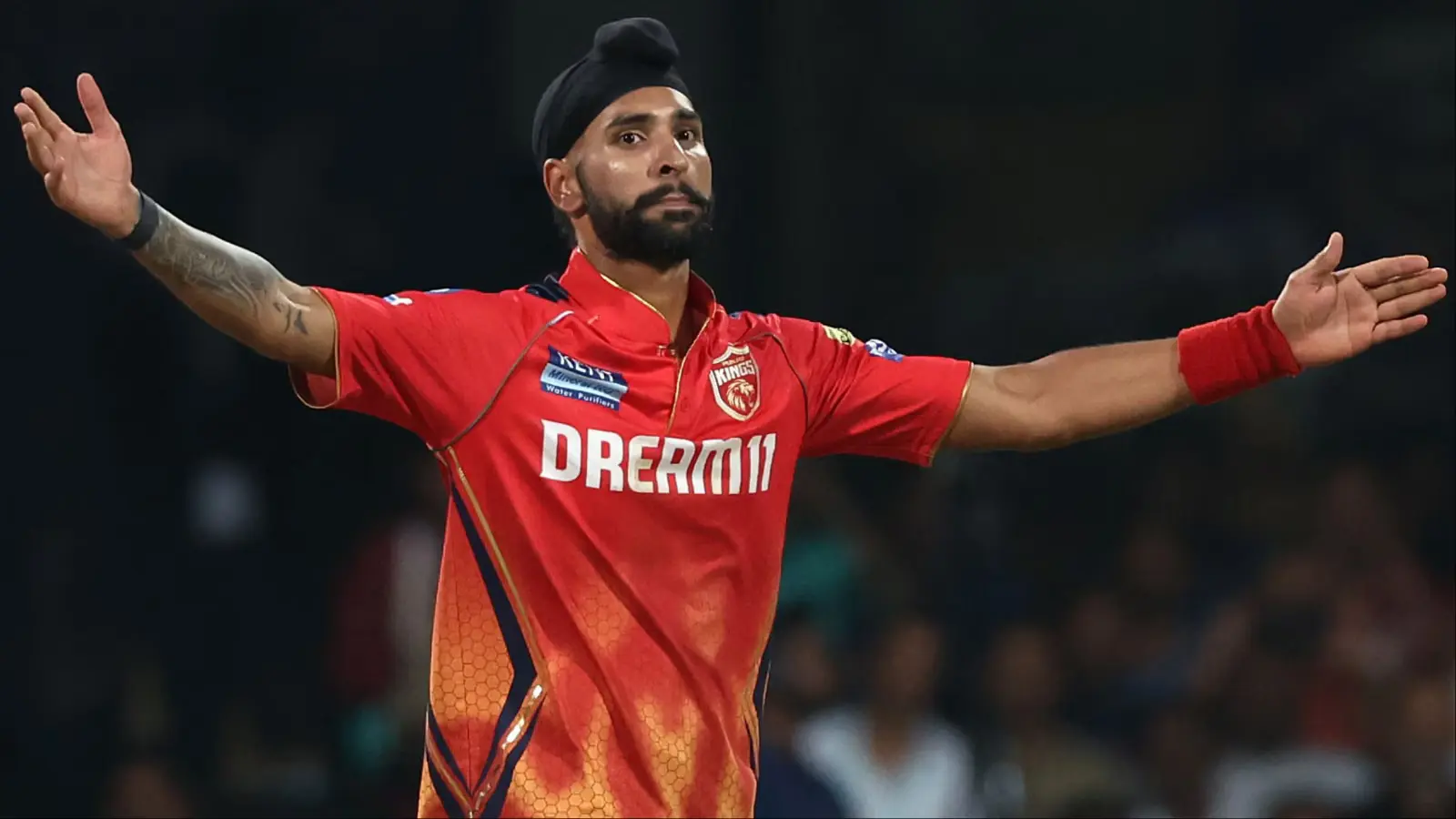
For seven IPL seasons, Harpreet Brar has remained one of Punjab Kings’ few constants. The franchise has gone through a rebranding, seven captains and several changes to its playing combination during that period. Brar, meanwhile, has quietly continued doing the same job.
The irony is that he has rarely been given the chance to do it consistently.
Harpreet Brar has played only two full IPL seasons since making his debut in 2019. Yet no Punjab Kings spinner has taken more wickets than him during that period. In IPL 2026, he appeared only twice, once in April and once in May. The problem was not a lack of returns. The bigger issue was that the role available to him had changed.
The Impact Player rule has made Brar’s position increasingly matchup-dependent. That is a difficult situation for a bowler whose biggest strength has always been consistency.
The numbers behind the selection problem.
Brar’s two appearances in IPL 2026 came in very different circumstances but produced useful returns. Against Rajasthan Royals, he finished with 0 for 25 from four overs in a match where 450 runs were scored, with Rajasthan making 228 after Punjab’s 222.
His second appearance came against Royal Challengers Bengaluru. Brar took 2 for 35, removing Jacob Bethell and Devdutt Padikkal. They were two of the four wickets RCB lost while scoring 222.
Those figures did not guarantee him another game. That is where the Impact Player rule has altered the calculation. Before the rule became part of the IPL’s tactical structure, Brar could offer Punjab two skills. He could bowl his left-arm spin and provide batting depth at No. 7.
Now the second part of his game carries much less value. Brar explained the problem himself: “If I play, there’s only Arshdeep and Yuzipaaji after me.”
Marco Jansen can bat above him. Azmatullah Omarzai can also be promoted ahead of him. That leaves Brar’s batting role almost redundant when Punjab are selecting their XI around an Impact Player.
The selection equation becomes straightforward. If Punjab want additional batting, Brar becomes harder to accommodate. If the pitch demands another fast bowler, the same applies.
“If bowling comes, I will be in the team,” Brar said. “If the total is more, the pacer plays. This is how it is.”
A spinner in a team that barely bowled spin
There is another statistic that explains why Brar’s opportunities have been so limited. Punjab Kings bowled spin for only 18.7% of their deliveries in IPL 2026, the lowest percentage among all teams. They also took only 14 wickets through spin, again the lowest in the competition.
Historically, that figure is significant for Punjab. It is jointly their lowest number of spin wickets in a season.
The contrast becomes even clearer when compared with their two final appearances. In 2014 and 2025, Punjab took 33% and 32% of their wickets through spin respectively. Those were their highest shares in a season.
In 2026, the team’s bowling strategy moved in the opposite direction.
Brar therefore faced two problems at once. His batting value had diminished because of the Impact Player rule while the team’s bowling composition offered limited room for a second specialist spinner.
That is why his absence from the XI cannot simply be explained by poor bowling.
His method has not changed
Brar’s bowling is built around repetition without becoming predictable. He uses a high-arm action and a good jump, relying on accuracy, changes of pace and movement across the crease. The aim is to keep asking questions without necessarily changing the basic method.
That skill has translated beyond the IPL. Since 2023, Brar has been the highest wicket-taker among spinners in the Syed Mushtaq Ali Trophy. He also expanded beyond his established white-ball role by making his Ranji Trophy debut during the 2025/26 season.
His first red-ball season produced 23 wickets at 21.26, comfortably the most among Punjab bowlers.
One of those wickets was KL Rahul, dismissed by a delivery that Brar described through its result rather than its reputation: a ball that passed Rahul and flattened the middle stump.
For Brar, red-ball cricket now represents more than another format. It is another route back into contention.
“I can only work on things”.
The frustration is obvious but Brar’s response has been practical.
“Sir, main na sirf kaam hi kar sakta hu,” he said when asked about his batting.
He has been working on batting for eight years. The problem is that the Impact Player rule has reduced the chances of that work being reflected in matches. Still, he remains eager to develop as an all-rounder.
His reasoning is simple. If bowling remains the stronger route into the XI, he wants to strengthen it. If batting can eventually become a meaningful part of his game, that creates another selection option.
The desire is not merely theoretical.
Brar’s childhood cricketing idol was Yuvraj Singh. He recalls copying Yuvraj’s batting as a child and trying to build his cricket around three skills: batting, bowling and fielding.
“I need to bat like him; I need to bowl and field like him,” Brar recalled.
The comparison is particularly relevant because Brar sees the development of his batting as a way of expanding his possibilities rather than replacing his bowling.
He refuses to stop looking for cricket
The lack of IPL cricket has also affected his match rhythm.
Brar has not played professional cricket since May. Instead of allowing that gap to become an extended absence from the game, he has looked for opportunities wherever they were available.
His wife is a practising doctor in the United Kingdom and the couple spend time there after the IPL. This year, Brar played club cricket in the UK.
His approach is uncomplicated.
“Whenever I have free time,” he said, “I want to play and stay associated with the game.”
That attitude also led to an opportunity during India’s England tour last year. Brar was around Birmingham when the Indian team was training. He messaged Shubman Gill and asked if he could join the session.
Brar trained with the team during an optional practice session and valued the chance to work alongside the Indian players. It was another example of him finding cricket rather than waiting for cricket to find him.
The next challenge is longer than an IPL season
Brar now has another Ranji Trophy season ahead of him after his encouraging debut campaign. His 23 wickets at 21.26 provide a clear starting point. More importantly, red-ball cricket gives him another format in which to demonstrate what he can offer.
Brar believes he can play Test cricket for India.
“Personally, I feel I can play Test cricket for India,” he said. “And for that, I am willing to put in all the hard work needed and will even exceed that in the future.”
For now, the route is about building evidence.
His IPL career has already shown that he can be effective. His Syed Mushtaq Ali Trophy record provides another measure of his white-ball consistency. His first Ranji season has opened a separate avenue.
The immediate challenge is finding enough cricket to turn those credentials into opportunities.
Brar’s seven-year IPL career has survived changes in captains, franchise identity and team combinations. His left-arm spin has remained remarkably steady through all of it.
The latest obstacle is different. It is not about whether he can bowl. It is about whether the modern IPL still has enough room for a player whose bowling is his primary skill and whose batting is still developing.
For Brar, the answer cannot come from waiting on the bench. His response so far has been to keep working, keep playing wherever possible and build another route into the XI.

Relevant news
Why India Missed the Women’s T20 World Cup Semifinals?
India entered their final league match knowing only a win against Australia would keep their…
India’s Road Gets Tougher as South Africa Boost Semifinal Hopes
South Africa's victory over India has made the race for the semifinals much more interesting…
The Shot That Defined Kane Williamson Better Than Any Century
There are many reasons why cricket fans admire Kane Williamson. There were his beautiful cover…
Four Reasons Afghanistan Struggled Against India in the One-Off Test
Afghanistan came into their one-off Test against India in New Chandigarh hoping to show how…

Group of Death: Australia, India and South Africa Set for T20 World Cup Battle
The Women's T20 World Cup 2026 is about to begin, and Group 1 is already…
Afghanistan’s Test Cricket Struggle: Eight Years Later, Still Waiting for More Opportunities
Afghanistan became a Test-playing nation in June 2018, and for the country's cricket fans, it…