

Jasprit Bumrah Chucking Controversy: How He Changed His Bowling Action?
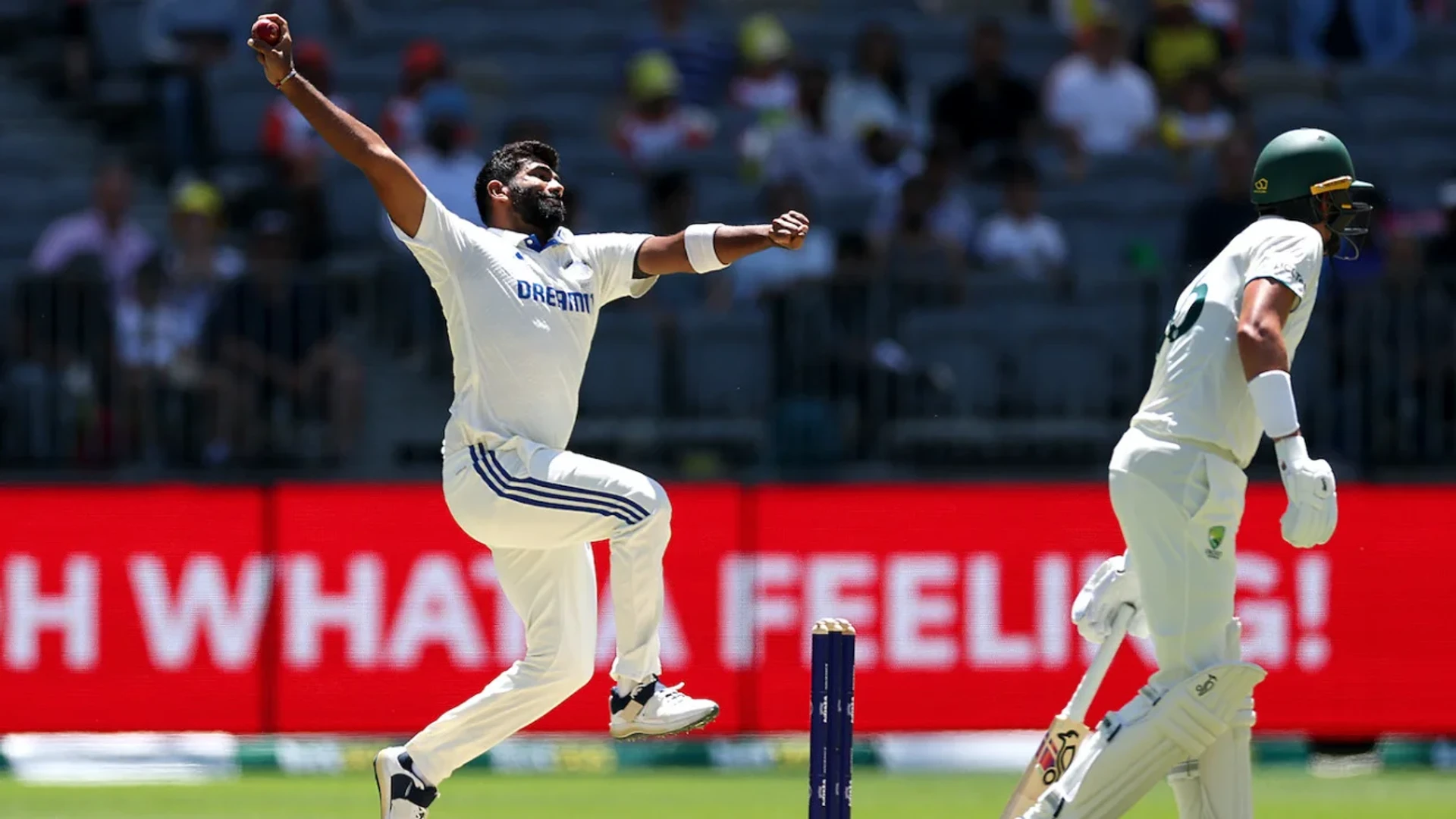
Jasprit Bumrah is known for his unusual bowling action, awkward run-up and ability to generate pace from a delivery stride that looks different from almost every other fast bowler. However, his unconventional style was not always accepted without questions. During his early years in competitive cricket, concerns were raised about whether his bowling arm remained straight throughout his delivery.
The Jasprit Bumrah chucking controversy reached a significant point during Gujarat Under-19s’ match against Karnataka in Mysore in December 2011. According to Gujarat captain Smit Patel, Bumrah was no-balled for chucking during the game. The incident allegedly led to discussions with match referee Atul Bedade and a decision to keep the young fast bowler out of Karnataka’s second innings.
However, the accounts of those involved do not entirely agree. Umpire Somnath Jha denied reporting Bumrah’s action, while other players recalled concerns about his bowling style. What is clear is that Bumrah faced doubts about his unusual action early in his career, and he remained determined to bowl in his natural style.
His journey offers an interesting look at the challenges faced by unconventional fast bowlers. It also raises an important question: how should cricket handle a bowler whose action looks unusual but whose effectiveness depends on that very movement?
Why Was Jasprit Bumrah Suspected of Chucking?
Bumrah’s early bowling action looked considerably different from the one cricket fans recognise today. His bowling arm did not straighten in the same way it does now, his non-bowling arm played little role in the delivery, and his jump was more exaggerated. He also bowled from a more side-on position at the crease.
These characteristics made his action difficult to read, but they also attracted suspicion. During his early years in organised cricket, batters, coaches and umpires at club, school, district and state levels questioned whether his bowling arm remained straight throughout the delivery.
The concern was understandable. Bumrah generated pace through a movement that looked awkward, particularly around the point of release. For observers unfamiliar with his mechanics, the action could easily appear questionable.
Yet an unusual-looking action and an illegal bowling action are not automatically the same thing. The accounts surrounding Bumrah’s early career illustrate why it is important to distinguish visual suspicion from a properly assessed concern.
Bumrah’s bowling action was eventually adjusted, particularly in the loading phase, but the reasons behind those changes are an important part of his story.
How Bumrah’s Bowling Action Looked Before He Became an International Star
As a teenager, Bumrah had not yet developed the distinctive action that would later become his trademark. His early style was still evolving, and he had experimented with imitating other bowlers.
One of his attempts involved copying Australian fast bowler Brett Lee. However, the imitation did not work particularly well. Teammates described the attempt as unsuccessful, with one recalling that Bumrah tried to reproduce Lee’s loading movement but shifted his bowling arm so suddenly that the action looked even more unusual.
Interestingly, footage from his age-group cricket days showed that Bumrah could also bowl with a more conventional loading position, a fluent run-up and a different bowling arc. While playing for Gujarat Under-19s, he had already demonstrated that he could trouble batters and shatter the stumps.
This suggests that his action was not simply a fixed technique that he had developed deliberately from the beginning. It evolved through experimentation, observation and practical experience.
Bumrah had watched different bowlers on television and incorporated elements of what he saw into his own game. He also refined his approach while bowling in an open-air parking lot in Ahmedabad.
From a cricketing perspective, this is an important detail. Young fast bowlers often experiment with their run-up, arm position and release point while trying to find a method that produces pace and control. In Bumrah’s case, those experiments resulted in a style that was difficult to replicate and even harder for opponents to read.
The 2012 NCA Camp: Coaches Wanted to Change Bumrah’s Action
One of the earliest major turning points came at the National Cricket Academy (NCA) camp in Bengaluru in mid-2012.
Until then, Bumrah had not fully understood what his natural bowling action looked like. His bowling was recorded at the camp, and he was shown the footage. Seeing his own action helped him confront how unusual his movements appeared.
Concerns about his technique also emerged during discussions at the NCA. Coaches examined whether his action could be sustained over extended periods and whether changes might reduce the potential risks associated with his bowling mechanics.
Roosh Kalaria, who knew Bumrah during this period, recalled that several people at the NCA wanted to change his bowling mechanism. Bumrah, however, was determined to retain his natural action.
Kalaria explained that Bumrah understood the concerns but was prepared to accept the possible injury risks as part of the game rather than abandon the way he bowled.
An NCA coach who worked with Bumrah also acknowledged that attempts were made to remodel his action. According to the coach, Bumrah bowled quickly but had an awkward technique, prompting recommendations to change his mechanics.
The revised action appeared more acceptable to the coaches, but the ball was not coming out correctly. That created a practical problem: changing the action might make it look more conventional, but it did not necessarily preserve the pace and delivery that made Bumrah effective.
The coaches eventually considered allowing him to continue with his natural action while examining what it would take to sustain it.
Fitness Became a Major Part of the Discussion
The NCA coaches consulted physiotherapists and strength-and-conditioning trainers to assess whether Bumrah’s bowling action could withstand the demands of fast bowling.
Their conclusion was that he would need to become exceptionally strong to bowl quickly for extended periods.
The coaching staff also discussed his diet. According to the NCA coach, Bumrah enjoyed burgers, pizzas, milkshakes and similar foods. He was advised to follow a stricter diet and pay greater attention to fitness and nutrition.
This was a practical response to the challenge facing a young fast bowler. Pace bowling places considerable demands on the body, and an unconventional technique makes it particularly important to understand how the bowler can sustain his workload.
However, the most revealing part of the episode was not the dietary advice. It was the disagreement over how much of Bumrah’s technique needed to change.
The coaches had concerns about sustainability, while Bumrah believed that altering his natural action could take away something essential from his bowling. Their discussion reflected a familiar coaching dilemma: how do you improve a young player’s technique without compromising the qualities that make him effective?
Why Jasprit Bumrah Refused to Remodel His Bowling Action
Bumrah’s refusal to abandon his natural action was not simply an act of stubbornness. His decision reflected a strong belief in his own method, even when experienced coaches questioned it.
During his time at the NCA, he was advised to spend time at the MRF Pace Academy in Chennai. He declined the opportunity because he feared that coaches there would also try to change his bowling action.
For a young cricketer, turning down the advice of established coaches is not an easy decision. At that stage of his career, Bumrah had limited experience at the highest levels of the game. Following the recommendations of senior coaches would have been an understandable choice.
Instead, he backed his own judgement.
There was a degree of confidence behind that decision because his bowling had already produced results. However, it also demonstrated that he understood the importance of preserving the movements that came naturally to him.
In my assessment, this was one of the most significant decisions in Bumrah’s development. A technically conventional action might have satisfied some observers, but it would not necessarily have made him a more effective bowler. The failed attempts to remodel his action suggested that visual neatness and bowling effectiveness did not always go hand in hand.
That does not mean every unconventional action should be left untouched. Coaches still need to consider legality, fitness, repeatability and injury risks. Bumrah’s case demonstrates the importance of assessing those factors individually rather than assuming that a strange-looking action must be corrected.
How Bumrah’s Action Changed After the Chucking Concerns
Although Bumrah resisted efforts to remodel his entire bowling action, his technique did evolve. The loading position of his bowling arm changed, moving towards the straighter-arm position seen in his later career.
Manprit Juneja explained that this adjustment was made specifically because Bumrah had been suspected of chucking. By loading with a straighter arm, Bumrah could reduce doubts about whether his bowling arm was coming through straight during the delivery.
This distinction matters. The change did not necessarily mean abandoning his natural action altogether. Instead, he altered a particular element of his bowling mechanics while retaining the unusual approach that defined his style.
The result was a delivery action that still looked unconventional but gave observers less reason to question the position of his arm.
Bumrah’s development therefore involved a balance between preserving his natural movement and responding to concerns about how that movement was perceived.
For a fast bowler, even a relatively small technical adjustment can affect rhythm, timing and the way the ball comes out of the hand. The earlier attempts to remodel Bumrah’s action had not worked as intended, making the eventual adjustment to his loading position particularly significant.
His story is a reminder that technical development does not always require a complete overhaul. Sometimes, the better solution is to identify the specific aspect causing concern and work on that without disturbing the rest of the bowler’s method.
The Run-Up That Made Bumrah Different
Bumrah’s unusual action was not limited to his bowling arm. His run-up also developed in a distinctive way.
Initially, he ran hard towards the crease. Over time, however, he realised that he was not transferring enough momentum and pace from his run-up into his final delivery.
That led him to develop the approach that became associated with his bowling: a combination of a jumbled walk, a hop and a short galloping movement before release.
Rather than following a conventional fast bowler’s run-up, Bumrah found a method that worked for him.
The significance of this development lies in the relationship between a bowler’s approach and his delivery. A fast bowler’s run-up is not simply about reaching the crease quickly. It must work with the bowler’s gathering movement, balance and release.
In Bumrah’s case, a more aggressive run-up had not necessarily produced the transfer of momentum he wanted. His revised approach emerged from recognising that problem and adapting his movements accordingly.
He also believed that his action was not causing him pain or discomfort. For the young bowler, that was sufficient reason to continue.
Of course, an absence of immediate discomfort does not prove that a bowling action carries no long-term injury risk. The NCA discussions about strength and conditioning show that the physical demands were being considered. Nevertheless, Bumrah’s willingness to assess his own experience and retain a method that worked for him was central to his development.
Why Some Coaches Accepted Bumrah’s Unusual Action
Not everyone who worked with Bumrah believed his action needed to be changed.
Kishore Trivedi, his coach at Royal Cricket Academy, recalled that some children at the academy questioned whether Bumrah’s action was legal. Trivedi said he brushed aside those concerns.
His own experience may have influenced his response. His son, Siddharth, had previously been called for an illegal action in domestic cricket. Although Siddharth was eventually cleared, the episode affected his career.
That experience provided a reason to be cautious about drawing conclusions from appearances alone. A premature allegation could have serious consequences for a young bowler, especially when the concern had not been properly established.
Narendra Pancholi, Bumrah’s coach at HB Kapadia High School, also accepted the action early in the bowler’s development. Pancholi recalled facing a bowler with a similar release while playing tennis-ball cricket in Vijaynagar as a teenager. Because the action had not attracted objections in those games, Bumrah’s style did not surprise him.
Pancholi also pointed out that Ahmedabad had other bowlers with awkward actions. In his view, Bumrah’s action was more exaggerated and delivered with greater pace, rather than being entirely without precedent.
These experiences help explain why some coaches were less concerned than others.
An action can appear unusual to someone seeing it for the first time while seeming familiar to someone who has encountered similar movements. That difference in perception can influence how quickly a player attracts suspicion.
However, familiarity alone cannot establish whether a bowling action is legal. The important point is that Bumrah’s early experiences involved a mixture of genuine concerns, differing judgements and a reluctance among some coaches to risk damaging a young player’s career through an unfounded accusation.
Lasith Malinga’s Example Changed How Some Observers Viewed Unusual Actions
One incident involving Lasith Malinga helped change the way some cricket observers in Ahmedabad assessed unconventional bowling actions.
Tushar Trivedi recalled a match involving India A in November 2003. During the game, an opposing bowler’s arm came close to the umpire’s head at the point of delivery.
Those watching were convinced that the bowler was throwing the ball. Anshuman Gaekwad, the former India cricketer and coach who was present, disagreed and believed the action was acceptable.
The bowler turned out to be Lasith Malinga, another fast bowler known for unconventional action.
Trivedi explained that the experience encouraged them to consult senior cricketers whenever they suspected an unusual bowling action. It also made them more open-minded about unconventional techniques.
The comparison with Bumrah is relevant because both bowlers challenged familiar expectations of how a fast bowler should deliver the ball. However, the value of the Malinga example is not that every unusual action should automatically be accepted. It is that appearances can create suspicion without necessarily providing a reliable basis for judgement.
Cricket has always required officials and coaches to distinguish between a delivery that looks unusual and one that actually breaches the rules. Trivedi’s account shows how one experience changed the approach of those who witnessed it.
Why Gujarat’s Earlier Chucking Cases Mattered
Bumrah’s early career unfolded against a background of other Gujarat bowlers facing allegations about their actions.
Siddharth, Monish Parmar and Amit Singh had all seen their careers negatively affected by chucking allegations. Each was subsequently cleared.
These cases contributed to a gradual change in attitude within the local cricketing environment. People became more cautious about drawing immediate conclusions when a bowler’s action appeared questionable.
The consequences of an allegation can extend beyond a single match. A young player may face questions about his technique, lose opportunities or feel pressured to change the way he bowls. Even when the player is eventually cleared, the experience can leave a lasting impact.
That context helps explain why some people around Bumrah were reluctant to see the same thing happen to him.
It also highlights the need for a measured approach. Coaches should identify potential technical or physical concerns, but accusations should not be based solely on how unfamiliar a delivery looks.
The Mysore Incident: When Bumrah Was Allegedly No-Balled for Chucking
The most significant reported episode involving Bumrah’s bowling action took place during Gujarat Under-19s’ match against Karnataka in Mysore across the first days of December 2011.
It was Bumrah’s first game for Gujarat Under-19s, but he was not given the new ball despite being regarded as Gujarat’s fastest bowler. Roosh Kalaria and the seventeen-year-old Chintan Gaja shared the new ball.
Bumrah entered the attack in the eighth over and made an immediate impact by having D. Nischal caught by Axar Patel.
However, Karnataka went on to build a substantial first-innings total. A double century from captain R. Samarth helped the hosts reach 418 runs after batting for more than four sessions.
Bumrah took one more wicket, dismissing Mohammed Taha for a fifth-ball duck, and finished with two wickets in his 22 overs. Gujarat were then bowled out for 281, with Bumrah contributing nothing with the bat from number eleven.
More importantly, he did not bowl during Karnataka’s second innings.
The reason for his absence became a point of disagreement among those who later recalled the match.
Smit Patel’s Account of the Alleged No-Ball
Smit Patel, Gujarat’s captain in that game, said Bumrah was no-balled for chucking a few minutes before lunch on the second day.
According to Patel, Karnataka had already accumulated a large total when concerns arose about the action of his fastest bowler. He approached match referee Atul Bedade for guidance and took Bumrah with him to demonstrate the hyperextended arm that had attracted attention.
Patel recalled that Bedade instructed him not to bowl Bumrah in the second innings but assured him that the matter would be resolved before the next match.
If this account is accurate, the incident would have been a particularly difficult introduction to higher-level cricket for a young bowler who had only just made it into Gujarat’s Under-19 side.
Bumrah had already shown that he could generate pace and take wickets. To then face an allegation of an illegal action, potentially affecting his ability to bowl, would have created considerable uncertainty.
It is not possible to establish Bumrah’s private thoughts from the available accounts. Nevertheless, it is reasonable to recognise how unsettling such a situation could be for a developing cricketer.
Somnath Jha Disputed Patel’s Version
Somnath Jha, one of the on-field umpires in the match, remembered Bumrah’s bowling but denied reporting his action.
Jha recalled the bowler’s pace, the way the ball came off the surface and the awkwardness of his action and run-up. He admitted that Bumrah’s selection had surprised him, but he did not remember raising concerns about the legality of the action.
He also explained that he had never reported a bowler during his career, particularly at that age, because he believed an incorrect judgement could damage a young player’s future.
The two accounts therefore differ on a crucial point. Patel recalled a no-ball for chucking and a discussion with the match referee, while Jha denied reporting Bumrah’s action.
Shreyas Gopal, who represented Karnataka in the match and later spent many years with Bumrah at Mumbai Indians, also did not recall significant discussions about Bumrah’s action in the opposition dressing room.
These differences should not be ignored. The available recollections do not provide a fully consistent account of what happened in Mysore, and it would be inaccurate to present every detail as undisputed fact.
What the episode does establish is that Bumrah’s action attracted attention during his early competitive career and that questions about his bowling became part of the discussion surrounding his development.
Why Gujarat Teammates Asked Bumrah to Wear Full Sleeves
The uncertainty around Bumrah’s action also influenced the decisions of his teammates.
Kalaria recalled that spinners in the team were wearing full sleeves around that period. The Gujarat players decided that Bumrah should also bowl in long sleeves because they did not want him to face unnecessary suspicion.
Kalaria said the team believed there was nothing wrong with Bumrah’s action and wanted to protect him from the risk of losing his place or being unfairly targeted.
Bumrah did bowl in full sleeves for at least a few matches that season, although it is not clear whether he followed the suggestion in every game.
The detail may seem minor, but it reveals how much uncertainty surrounded his bowling at the time. Teammates were thinking not only about how he could take wickets but also about how his technique might be interpreted by officials and opponents.
From a team perspective, the concern was understandable. A fast bowler who could trouble batters with his pace was a valuable asset, and the players did not want doubts about his action to become a distraction.
However, wearing long sleeves was not itself proof of legality or illegality. It was a practical response by teammates who wanted to avoid unnecessary attention while remaining confident in their bowler.
Were the Chucking Allegations Mind Games?
Bumrah’s action was questioned on several occasions by opposition captains and team managers. Some of these interventions may have been attempts to place additional pressure on him or his team.
In competitive cricket, doubts about an opponent’s technique can become part of the contest. A captain facing a difficult bowler may look for ways to interrupt his rhythm, create uncertainty or force the opposition to respond to an issue away from the scoreboard.
The accounts surrounding Bumrah suggest that such concerns were not always treated as formal technical complaints. In some cases, they were viewed as mind games.
However, it would be wrong to assume that every objection was made in bad faith. A genuinely unusual action can raise questions, and officials have a responsibility to address legitimate concerns.
The distinction lies in how those concerns are handled. A suspicion should prompt a proper assessment rather than an automatic conclusion.
Bumrah’s experience demonstrates the difficulty of balancing those responsibilities. His opponents had reasons to scrutinise an unfamiliar action, but the consequences of an incorrect accusation could have been significant for a young player.
What Bumrah’s Experience Teaches Us About Fast-Bowling Technique?
Bumrah’s early career offers several useful lessons about coaching, technical development and the demands of fast bowling.
First, unconventional movement does not automatically mean ineffective technique. Bumrah’s awkward action and unusual run-up did not prevent him from bowling quickly or taking wickets. In the Mysore match, he struck in his first over and finished with two wickets despite Karnataka’s large total.
Second, a technique that looks more conventional is not necessarily more effective for the individual bowler. The NCA coach’s recollection that the remodelled action did not produce the desired delivery is particularly important. It suggests that changes should be judged by their effect on performance as well as appearance.
Third, physical sustainability matters. The NCA coaches’ discussions with physiotherapists and strength-and-conditioning trainers showed that Bumrah’s pace could not be considered separately from his fitness. The advice to build strength and follow a disciplined diet reflected the physical demands of maintaining his style.
Finally, young players need confidence in their own abilities, but that confidence must coexist with sensible technical assessment. Bumrah’s determination to retain his natural action helped him preserve his distinctive method. At the same time, his eventual adjustment to the loading position shows that conviction does not have to mean refusing every change.
In my view, this is the most useful lesson from Bumrah’s story. The best technical decision is not always the one that makes a bowler look like everyone else. It is the one that preserves effectiveness while addressing legitimate concerns about legality and physical demands.
How the Controversy Helped Shape Bumrah’s Signature Action
The bowling action associated with Bumrah today developed through a combination of experimentation, persistence and adjustment.
His early attempts to copy other bowlers did not produce a satisfactory result. His run-up evolved after he recognised that his original approach was not transferring momentum as he wanted. At the NCA, he resisted attempts to remodel his entire action because he believed that doing so would undermine his natural bowling method.
The concerns about chucking eventually contributed to a change in his loading position. Juneja specifically linked the straighter loading position to the suspicion that Bumrah’s arm might not be coming through straight.
That adjustment appears to have reduced the scepticism surrounding his action, allowing him to continue with the distinctive movements that remained central to his bowling.
It would be too simplistic to say that the controversy alone created Bumrah’s signature style. His action had already evolved through observation and experimentation, and his run-up was shaped by his own assessment of how he generated pace. But the allegations clearly formed an important part of the process that followed.
The episode also shows how a technical challenge can influence a player’s development without defining his entire career. Bumrah did not simply abandon his original method. He retained its essential characteristics while changing a specific element that had attracted suspicion.
Conclusion: Self-Belief Helped Bumrah Stay True to His Bowling
Jasprit Bumrah’s chucking controversy was about more than an unusual bowling action. It was a test of how a young fast bowler responded when his technique attracted suspicion, coaches recommended changes and even the circumstances of a match became uncertain.
The recollections of his early career do not agree on every detail, particularly the alleged no-ball during Gujarat Under-19s’ match against Karnataka in Mysore. However, they consistently reveal that his action raised questions and that he remained determined to bowl in his natural style.
His refusal to accept a complete remodelling of his action was supported by a strong belief in what worked for him. Yet his later adjustment to a straighter loading position also demonstrates that preserving a natural technique does not mean avoiding every change.
For aspiring fast bowlers, the lesson is not to copy Bumrah’s action or reject coaching advice. It is to understand their own mechanics, take physical demands seriously and make technical decisions based on evidence rather than appearances alone.
Bumrah’s early struggles underline an important principle in cricket: an unconventional bowler deserves careful assessment, not an automatic verdict. His journey shows why the right balance between coaching, physical preparation and individual self-belief can matter so much in the development of a fast bowler.

Relevant news

Why Early Cricket Training in India Needs a Rethink?
Vaibhav Sooryavanshi has given Indian cricket fans another remarkable teenage success story. At just 15,…

Mitchell Starc’s Day of Extremes in Cape Town: How Australia’s Fast Bowler Turned the Tide
Mitchell Starc experienced two contrasting spells on the same day in Cape Town. First, South…

Harpreet Brar’s seven-year IPL wait for a settled role
For seven IPL seasons, Harpreet Brar has remained one of Punjab Kings' few constants. The…
Why India Missed the Women’s T20 World Cup Semifinals?
India entered their final league match knowing only a win against Australia would keep their…
India’s Road Gets Tougher as South Africa Boost Semifinal Hopes
South Africa's victory over India has made the race for the semifinals much more interesting…

The Shot That Defined Kane Williamson Better Than Any Century
There are many reasons why cricket fans admire Kane Williamson. There were his beautiful cover…