

What’s Happening with Mohammed Siraj?
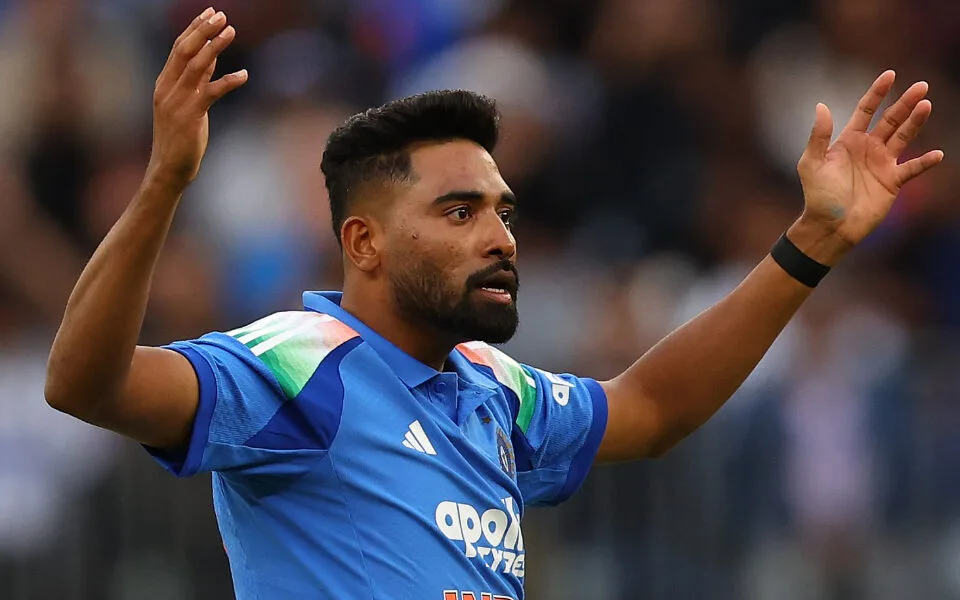
What’s happening with Mohammed Siraj? That’s a reasonable question to ask as India prepares for their two-Test series against New Zealand. Siraj is part of both the ODI and Test squads, but while three of his teammates have already left the ODI group to join the pre-Test camp in Wellington, he remains with the one-day squad alongside Kuldeep Yadav. The difference is difficult to ignore, particularly when Siraj is expected to play a major role in the upcoming Tests.
Shubman Gill, KL Rahul and Anshul Kamboj have already travelled to Wellington. Siraj, meanwhile, has stayed back for the fourth and fifth ODIs in Mount Maunganui. Kuldeep’s situation is perhaps easier to understand. Given the conditions typically expected in Wellington and Christchurch, his involvement in the two Tests may be limited. Siraj’s case is different. He is a regular in India’s Test side and, behind Jasprit Bumrah, arguably the team’s second-most-important red-ball fast bowler.
So shouldn’t he be with his Test teammates already, preparing for the first Test at Basin Reserve on November 19?
There may be a perfectly reasonable explanation. India could want Siraj to get some competitive cricket before the longer format begins. There is a popular belief that he performs better when he has regular match practice, and the team management may share that view. But there is one detail that makes the situation more complicated: Siraj has not bowled a single ball in the ODI series so far.
Siraj’s unusual journey through the ODI series
To understand why his presence in the ODI squad has attracted attention, it helps to look at the timeline.
Siraj was not part of India’s squad for the first ODI in Auckland. He had only just completed his commitments with India A in the second unofficial Test against New Zealand A in Christchurch.
He subsequently joined the senior squad in Wellington ahead of the second ODI, but did not feature in the playing XI. The third ODI in Hamilton was washed out without a ball being bowled. Although the toss took place, India once again announced a team without Siraj.
Across all three matches, India opted for attacks featuring four seamers. Arshdeep Singh, Auqib Nabi, Anshul Kamboj and Gurnoor Brar were the four quicks selected.
That meant Siraj remained on the sidelines despite being available for the latter two matches.
There was, however, a small indication of what might happen next. On Thursday, ahead of the fourth ODI, Siraj took the new ball during India’s net session and bowled a lengthy spell. With Kamboj having left the squad to join the Test preparations, Siraj is expected to have an opportunity to enter the playing XI for Friday’s match.
It would give him a chance to play competitive cricket before the Test series, although the timing of that opportunity raises another question. If match practice was the primary objective, why did he not play the second ODI or feature in the team announced for the third?
Perhaps the answer lies in how India are managing his workload rather than simply trying to get him into the playing XI.
Match practice or workload management?
India are dealing with a three-format scheduling challenge, and not every decision on this tour can be understood in isolation.
The T20Is have been relatively less important than the ODIs and Tests. India are building towards next year’s 50-overs World Cup, while an overseas Test series remains significant, regardless of the additional incentive of World Test Championship points.
Jasprit Bumrah, for instance, has been rested even from the ODI leg. India may also be trying to manage Siraj’s workload carefully, particularly considering how much cricket he has played in the longer format.
Since the two Test matches in Sri Lanka in August, Siraj has appeared in only five competitive games. His pace was noticeably down during those Tests, which may have prompted discussions about his workload and preparation.
However, there is another way of looking at those five appearances. Four of his five competitive matches have come since the beginning of October. These include one ODI and three first-class matches.
More importantly, Siraj has bowled 68 overs across those three first-class games, representing two Ranji Trophy appearances and one match for India A.
A significant portion of that workload came in Christchurch. During the second unofficial Test against New Zealand A, he bowled 35 overs in a single innings and claimed four wickets.
That match only concluded on November 3. It is possible India wanted to give him some recovery time before asking him to bowl again in competitive cricket.
There is a reasonable argument for that approach. Fast bowlers do not necessarily benefit from playing every available match, particularly when a demanding Test assignment is approaching. A player can be physically available without being ready for another heavy workload.
The team’s possible plan may therefore be to give Siraj two ODIs in Mount Maunganui before moving him into the red-ball preparation routine.
India are scheduled to travel from Mount Maunganui to Wellington on November 16, followed by two days of red-ball nets on November 17 and 18. The first Test at Basin Reserve begins on November 19.
If that is indeed the thinking, the schedule could provide Siraj with a combination of competitive cricket, recovery and focused preparation.
Is this what the management has planned? Who knows. Indian team managements are notoriously tight-lipped about most things. They do not owe the public an explanation for every selection or workload decision. They are a sports team, not a government ministry.
Still, a little more clarity would help. Otherwise, seemingly straightforward selection decisions leave room for unnecessary speculation.
From one of the world’s best ODI quicks to a peripheral figure
While India’s immediate Test preparations explain part of Siraj’s situation, they do not answer the bigger question about his position in the ODI setup.
That is arguably the more interesting aspect of his current situation.
During the previous ODI World Cup cycle, between 2019 and 2023, Siraj established himself as one of the best fast bowlers in the format. Among fast bowlers who played at least 20 ODIs between the two World Cups, excluding the tournament matches, he had the best bowling average: an outstanding 18.61.
Those numbers reflected his importance to India’s limited-overs attack. He was not merely a backup option or someone brought in to fill a gap. He was a central part of the team’s plans.
There was a reason Mohammed Shami found himself outside India’s starting XI during the first half of the 2023 ODI World Cup. Siraj had earned his place through his performances and consistency.
But international cricket moves quickly, and the position of a player who once seemed indispensable can change surprisingly fast.
Since the final of the 2023 World Cup, Siraj has played only 10 ODIs. He was also left out of India’s squad for the 2025 Champions Trophy.
The conditions and squad requirements played a role in that decision. With India’s matches taking place in the UAE, the selectors had room for only three specialist fast bowlers. Those places went to Bumrah, Arshdeep Singh and Mohammed Shami.
Even when Bumrah was ruled out on the eve of the tournament, Siraj did not receive the opportunity to replace him. India selected Harshit Rana instead.
That decision offered another indication of where Siraj stood in the ODI selection hierarchy.
Why India’s other fast bowlers are ahead of Siraj
The competition for fast-bowling places in India’s ODI side is not simply about who has the best career record. Different bowlers offer different qualities, and those differences can influence selection as much as conventional bowling statistics.
Arshdeep Singh, for example, provides a left-arm option. That gives the attack a different angle and variety that a predominantly right-arm pace group cannot offer.
Harshit Rana, Anshul Kamboj and Auqib Nabi bring another useful quality: they can plausibly bat at No. 8. Their potential batting contributions give the team greater flexibility when balancing the playing XI.
Gurnoor Brar and Prasidh Krishna offer something different again. Both are tall, quick, hit-the-deck bowlers, and they are viewed as more useful options through the middle overs.
Siraj remains a highly capable fast bowler, but he does not necessarily offer the same combination of attributes.
This does not mean he has suddenly become an inferior bowler. It means the requirements of India’s ODI attack have evolved, and the selectors now have several alternatives who offer qualities that may be more useful in particular conditions or team combinations.
There is also the workload factor. Siraj has occasionally been rested from limited-overs cricket with Test matches in mind. During those periods, other bowlers have received opportunities and, importantly, impressed.
That creates a difficult cycle for an established player. Resting him may be sensible for his Test career, but it also gives competitors opportunities to strengthen their claims in the format where he is no longer an automatic selection.
The numbers tell a different story after the 2023 World Cup
Siraj’s ODI numbers since the 2023 World Cup final underline how much his position has changed.
During the previous World Cup cycle, he averaged 18.61 among fast bowlers with at least 20 ODI appearances between the two tournaments.
Since the end of the 2023 World Cup, however, he has taken just nine wickets in 10 ODIs at an average of 47.44.
The contrast is significant.
| Period | ODI matches | Wickets | Bowling average |
| 2019-2023 World Cup cycle* | At least 20 for the qualifying comparison | — | 18.61 |
| Since the 2023 World Cup final | 10 | 9 | 47.44 |
The 18.61 figure represents the best average among fast bowlers who played at least 20 ODIs between the two World Cups, excluding tournament matches.
The numbers are not entirely straightforward, though. Siraj has played only sporadically since the 2023 World Cup, so it would be unfair to treat his recent average as a complete reflection of his ability.
Regular opportunities matter. Bowlers develop rhythm through matches, understand their roles through repeated selection and gain confidence from being trusted with specific phases of an innings.
Siraj has not enjoyed that continuity.
At the same time, international selection is rarely a sentimental exercise. The selectors cannot ignore the performances of players who have taken their opportunities while Siraj has been occupied with Test cricket or rested.
That is the difficult reality of playing for India, where competition for places is intense and a player’s previous achievements do not guarantee future selection.
What does this mean for Siraj’s career?
There are two separate questions surrounding Siraj at the moment.
The first is his immediate role in the Test series against New Zealand. Assuming there are no fitness surprises, he would be expected to play an important role at Basin Reserve on November 19. His record in Test cricket and his position in India’s fast-bowling group make him difficult to overlook.
The second concerns his future in ODI cricket.
India are preparing for another 50-overs World Cup cycle, and the management will want to identify a settled group of fast bowlers. Bumrah remains central to those plans, while Arshdeep offers left-arm variety. Rana, Kamboj and Nabi provide potential batting depth, and Brar and Prasidh Krishna bring the height and pace that can be useful through the middle overs.
Siraj must compete with all of them, while also balancing his responsibilities in Test cricket.
That is not an easy position for a player who was once among the most reliable ODI fast bowlers in the world.
Perhaps the management still sees him as an important part of its long-term plans. Perhaps his limited ODI appearances are largely a consequence of workload management and the priority given to Test cricket. Or perhaps the competition has simply moved ahead while he has been occupied elsewhere.
There is no definitive answer available from the information surrounding this tour.
And that is what makes the situation worth watching. Siraj’s immediate priorities may be clear enough: get through the ODI matches, prepare for the Tests and be ready to lead India’s pace attack alongside Bumrah. But his longer-term place in the ODI setup is much less certain.
So, what’s happening with Mohammed Siraj?
A lot, much of it difficult to explain, much of it beyond his control, and some of it connected to the choices India must make when managing three formats and an increasingly competitive group of fast bowlers. The next few weeks may offer more clues, but they may not provide all the answers.

Relevant news

Brian Lara vs Sachin Tendulkar: Who Was the Greatest Test Batsman of All Time?
The debate over Brian Lara vs Sachin Tendulkar is one of the most fascinating discussions…
Virat Kohli’s New ODI Batting Approach: How He Is Unlocking Another Gear Ahead of 2027
Virat Kohli has spent nearly two decades establishing himself as one of the greatest batters…
Manvanth Kumar: How Karnataka’s Surprise Ranji Trophy Pick Is Emerging as a Promising All-Rounder
Manvanth Kumar was not expecting to feature in Karnataka's opening matches of the Ranji Trophy…
Australia’s 288-Run Chase: How the Hard Grind Against South Africa Revealed a Winning Blueprint?
Australia have 288 runs to chase against South Africa in the final Test at Cape…
Jasprit Bumrah Chucking Controversy: How He Changed His Bowling Action?
Jasprit Bumrah is known for his unusual bowling action, awkward run-up and ability to generate…

Why Early Cricket Training in India Needs a Rethink?
Vaibhav Sooryavanshi has given Indian cricket fans another remarkable teenage success story. At just 15,…