

IPL 2027: Hardik Pandya vs Arshdeep Singh, Which Franchise Got the Better Deal?
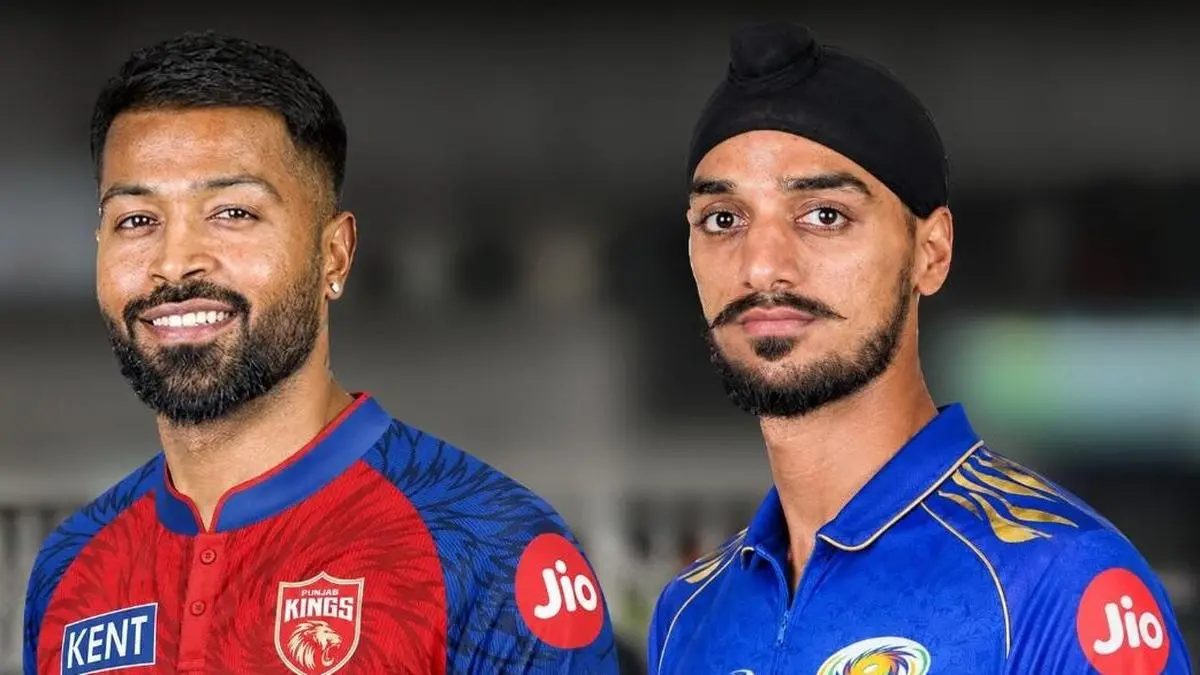
The Hardik Pandya-Arshdeep Singh trade has created an interesting question ahead of IPL 2027: who actually got the better deal, Mumbai Indians or Punjab Kings? Mumbai have secured one of India’s most dependable left-arm fast bowlers, while Punjab have brought in an experienced all-rounder with a proven record of winning IPL titles. Both franchises have agreed to exchange players valued at ₹18 crore, but does an equal price mean equal value?
Not necessarily. Hardik and Arshdeep address very different requirements. One offers batting depth, bowling options and experience of leading teams to IPL titles. The other provides a specialist bowling skill that is difficult to replace, particularly in a competition where Indian fast bowlers are among the most valuable resources.
There is also a question of timing. Hardik’s second stint with Mumbai has ended after three seasons as captain, while Arshdeep leaves Punjab after eight seasons with the franchise. Neither departure is insignificant.
So, which franchise should be happier? To answer that, it is worth looking beyond the names and examining what each player brings to his new team.
Hardik Pandya to Punjab Kings, Arshdeep Singh to Mumbai Indians: What are the trade details?
The IPL officially confirmed the exchange on November 11, 2026. Mumbai Indians captain Hardik Pandya will join Punjab Kings, while Arshdeep Singh will move to the five-time champions.
The financial terms are straightforward:
| Trade details | Hardik Pandya | Arshdeep Singh |
| Previous franchise | Mumbai Indians | Punjab Kings |
| New franchise | Punjab Kings | Mumbai Indians |
| Trade fee | ₹18 crore | ₹18 crore |
| Previous fee | ₹16.35 crore | ₹18 crore |
| IPL appearances | 162 | 96 |
| IPL runs | 2,955 | 32 |
| IPL wickets | 82 | 111 |
Hardik’s fee has increased from ₹16.35 crore to ₹18 crore, while Arshdeep retains his existing ₹18 crore fee.
On paper, it is a straight swap. In cricketing terms, however, the two franchises are making different bets.
Punjab are investing in a proven all-rounder who can influence matches in multiple departments. Mumbai are investing in a specialist left-arm fast bowler who can strengthen their pace attack.
Why did Punjab Kings want Hardik Pandya?
Punjab Kings have been searching for their maiden IPL title, and Hardik’s arrival suggests they want another experienced match-winner in their squad.
The Baroda all-rounder has played 162 IPL matches, scoring 2,955 runs at a strike rate of 146.28 and taking 82 wickets. Those numbers alone make him a valuable T20 player, but his experience in successful teams adds another dimension.
Hardik began his IPL journey with Mumbai Indians in 2015. He was part of four title-winning campaigns with the franchise in 2015, 2017, 2019 and 2020.
He then moved to Gujarat Titans ahead of IPL 2022. What followed was arguably the most successful period of his captaincy career. He led Gujarat to the title in their debut season and guided them to another final in 2023.
That is the experience Punjab are acquiring.
However, there is an important clarification regarding his leadership role. Punjab co-owner Ness Wadia has confirmed that Shreyas Iyer will continue as captain. Hardik is therefore not arriving to replace Shreyas or take over the leadership responsibilities.
In fact, that could be a positive development.
Hardik can concentrate on his performances without carrying the additional responsibility of captaining another franchise. He has previously worked with head coach Ricky Ponting, and his existing relationship with Shreyas Iyer could also help him settle into the dressing room.
Punjab’s squad already has several players capable of contributing in multiple departments, including Marco Jansen, Azmatullah Omarzai, Harpreet Brar and Shashank Singh. Hardik adds another established all-round option.
But does that automatically make Punjab’s batting stronger?
Potentially, yes. Hardik can provide middle-order power, contribute with the ball and give the captain another option when match situations demand flexibility.
The bigger question is his fitness.
Hardik’s recent injury concerns cannot be ignored. His IPL 2026 campaign was affected by fitness problems, including back spasms, and he has also experienced other injury setbacks. Punjab will need to manage his workload carefully if they want to get the best out of him across an entire season.
Wadia has expressed confidence in Hardik’s recovery and return before IPL 2027. He has also spoken positively about the all-rounder’s mental state and excitement about joining Punjab.
That is encouraging, but the real assessment will come when Hardik starts playing competitive cricket again.
Why did Mumbai Indians need Arshdeep Singh?
Mumbai’s decision is easier to understand when viewed through their bowling requirements.
Arshdeep is not simply another fast bowler. He is a left-arm quick who can operate with the new ball and deliver at the death.
Across 96 IPL matches for Punjab Kings, he has taken 111 wickets, making him the franchise’s all-time leading wicket-taker.
He made his IPL debut in 2019 and gradually became one of Punjab’s most dependable bowling options.
His recent numbers also support Mumbai’s decision.
Arshdeep claimed 21 wickets in IPL 2025 and followed that with 14 wickets in the 2026 season. His ability to take early wickets and bowl under pressure towards the end of an innings makes him an attractive addition to Mumbai’s attack.
There is another important factor: his left-arm angle.
Mumbai already have Jasprit Bumrah, one of the most established fast bowlers in T20 cricket. Adding Arshdeep gives the franchise a different bowling option and allows them to approach various match situations with greater flexibility.
The Indian Express had reported before the deal was confirmed that Mumbai were particularly interested in strengthening their bowling attack. Arshdeep’s ability to bowl in the Powerplay and combine with Bumrah at the death was among the attractions.
That is a fairly logical recruitment strategy.
Mumbai do not necessarily need another player who can bat aggressively in the middle order as much as they need dependable bowling resources. Arshdeep addresses a specific requirement rather than adding another general-purpose option.
However, Mumbai must also consider what they have lost.
Hardik was not just a middle-order batter. His ability to contribute with the ball gave Mumbai an additional option, and his experience as captain was another part of his value.
With his departure, Mumbai will have to reassess their leadership and all-rounder combinations.
The biggest difference: Hardik’s all-round ability versus Arshdeep’s specialist bowling
This is where the trade becomes particularly interesting.
Hardik and Arshdeep are both established Indian players, but comparing their contributions using a single metric would be misleading.
Hardik offers three important qualities-
- Middle-order batting with an aggressive approach.
- Medium-pace bowling gives the captain another option.
- Experience of leading Gujarat Titans to an IPL title and another final.
Arshdeep offers a different set of strengths-
- Left-arm fast bowling.
- Powerplay wicket-taking ability.
- Death-over experience and the ability to bowl under pressure.
The distinction matters because all-rounders can change the balance of a playing XI. A player who contributes with both bat and ball can allow a team to select an additional specialist.
However, specialist fast bowlers are equally important. A team cannot always compensate for the absence of a reliable death bowler simply by adding another batter.
For Punjab, Hardik’s value will depend on how effectively he contributes in both departments. For Mumbai, Arshdeep’s value will depend on whether he can consistently deliver wickets and control runs across different phases.
There is no automatic winner here.
What Punjab Kings lose by releasing Arshdeep Singh
It would be easy to focus on Hardik’s achievements and overlook the significance of Arshdeep’s departure.
After all, 111 wickets in 96 matches is a substantial contribution. He was not an ordinary member of Punjab’s bowling attack. He was its leading IPL wicket-taker.
He had also spent eight seasons with the franchise, developing from a young fast bowler into an established international player.
Wadia acknowledged that releasing Arshdeep was an emotional decision. He described the bowler as an important part of Punjab’s journey and recognised how much he had developed during his time with the team.
But Punjab appear confident about their remaining bowling resources.
Wadia mentioned Yash Thakur, Vaibhav Arora, Harpreet Brar, Marco Jansen and Xavier Bartlett when discussing the options available to the franchise.
That gives Punjab some alternatives, although replacing Arshdeep’s specific left-arm bowling skill and experience will not be straightforward.
The franchise may also have to use the December mini-auction to strengthen its pace attack.
This is perhaps the biggest risk associated with the trade. Hardik improves Punjab’s batting and all-round depth, but the team must ensure that its bowling does not become weaker in the process.
What do Mumbai lose by releasing Hardik Pandya?
Mumbai’s decision also comes with a cost.
Hardik has been part of four IPL title-winning campaigns with the franchise. He understands the environment, has experience of playing alongside several established players and has previously contributed significantly with both bat and ball.
His second stint, however, was not as successful as either party might have hoped.
He returned to Mumbai ahead of IPL 2024 and replaced Rohit Sharma as captain. The transition attracted considerable attention, and the team struggled during his first season as leader.
Mumbai finished last in 2024, improved to reach the playoffs in 2025, but finished ninth in 2026.
Hardik’s own fitness problems also complicated matters.
It is worth asking whether Mumbai could have continued with him and simply strengthened their bowling through the auction. Perhaps. But the franchise appears to have decided that Arshdeep was a more suitable investment for its immediate requirements.
The decision also reflects a broader point about franchise cricket: previous achievements do not guarantee a player will remain the right fit forever.
Hardik was once an important part of Mumbai’s successful combination. That does not necessarily mean he was the best option for the franchise heading into 2027.
Hardik Pandya vs Arshdeep Singh: Who has the better IPL record?
The numbers reveal why both players were attractive trade targets.
| IPL statistic | Hardik Pandya | Arshdeep Singh |
| Matches | 162 | 96 |
| Runs | 2,955 | 32 |
| Batting strike rate | 146.28 | 68.09 |
| Wickets | 82 | 111 |
| Primary role | All-rounder | Left-arm fast bowler |
| Major IPL achievement | Four titles with MI; captain of GT’s 2022 title-winning side | PBKS all-time leading wicket-taker |
Hardik has played 66 more IPL matches and offers a batting contribution that Arshdeep cannot replicate.
Arshdeep, meanwhile, has taken 29 more wickets despite playing fewer matches. That underlines his importance as a specialist bowler.
Neither statistic should be interpreted in isolation. Hardik is not selected primarily as a specialist bowler, and Arshdeep is not expected to provide the same batting output as an all-rounder.
The more useful comparison is how each player’s skills fit the needs of his new franchise.
So, who won the Hardik-Arshdeep trade?
There are two ways to judge this deal: immediate squad improvement and long-term team balance.
Punjab Kings: The bigger all-round investment
Punjab have acquired an experienced Indian all-rounder who has won IPL titles with two different franchises and has previously demonstrated his ability to lead a team successfully.
His existing relationship with Shreyas Iyer and Ricky Ponting could also make the transition easier.
The risk is that Punjab have surrendered their leading IPL wicket-taker. If their replacement bowlers cannot fill that gap, Hardik’s batting contribution may not be enough to compensate.
Mumbai Indians: The more targeted recruitment
Mumbai have addressed a specific weakness by bringing in a proven Indian left-arm fast bowler.
Arshdeep’s record, recent wicket-taking numbers and ability to bowl in different phases make him a valuable addition. His combination with Bumrah could be particularly important.
The concern is the loss of Hardik’s all-round contribution. Mumbai will need to find the right balance in their batting and bowling combinations without him.
Final verdict: Mumbai Indians or Punjab Kings?
If the question is which franchise has acquired the more versatile player, Punjab Kings have the advantage. Hardik can influence a match with both bat and ball, and his experience in successful IPL campaigns is a significant asset.
But if the question is which franchise has addressed a more specific team requirement, Mumbai Indians have a strong case.
Arshdeep is an established Indian left-arm fast bowler, and players with his ability to bowl in the Powerplay and at the death are difficult to replace.
Our verdict: Mumbai Indians have a slight edge in the trade, provided Arshdeep maintains his recent bowling form.
That does not make Punjab’s decision a bad one. Hardik could prove extremely valuable if he remains fit and contributes consistently with both bat and ball.
Ultimately, the trade will be judged by more than individual statistics. Mumbai need Arshdeep to strengthen their bowling attack, while Punjab need Hardik to improve their overall combination without allowing the departure of their leading wicket-taker to become a weakness.
Both teams have taken calculated risks. The IPL 2027 season will tell us which one calculated better.

Relevant news
India won the series in New Zealand, but how close are they to finding their perfect ODI side?
India won the series in New Zealand. So shouldn't they be leaving Tauranga with more…

USA Cricket Has Been Suspended Four Times. Can a New Board Finally End the Politics?
American cricket has a governance problem that refuses to go away. The United States of…
What’s Happening with Mohammed Siraj?
What's happening with Mohammed Siraj? That's a reasonable question to ask as India prepares for…
Brian Lara vs Sachin Tendulkar: Who Was the Greatest Test Batsman of All Time?
The debate over Brian Lara vs Sachin Tendulkar is one of the most fascinating discussions…
Virat Kohli’s New ODI Batting Approach: How He Is Unlocking Another Gear Ahead of 2027
Virat Kohli has spent nearly two decades establishing himself as one of the greatest batters…
Manvanth Kumar: How Karnataka’s Surprise Ranji Trophy Pick Is Emerging as a Promising All-Rounder
Manvanth Kumar was not expecting to feature in Karnataka's opening matches of the Ranji Trophy…