

Australia’s Ball-Tampering Scandal Returns: How Two Weeks of Revelations Reopened the Wounds of 2018
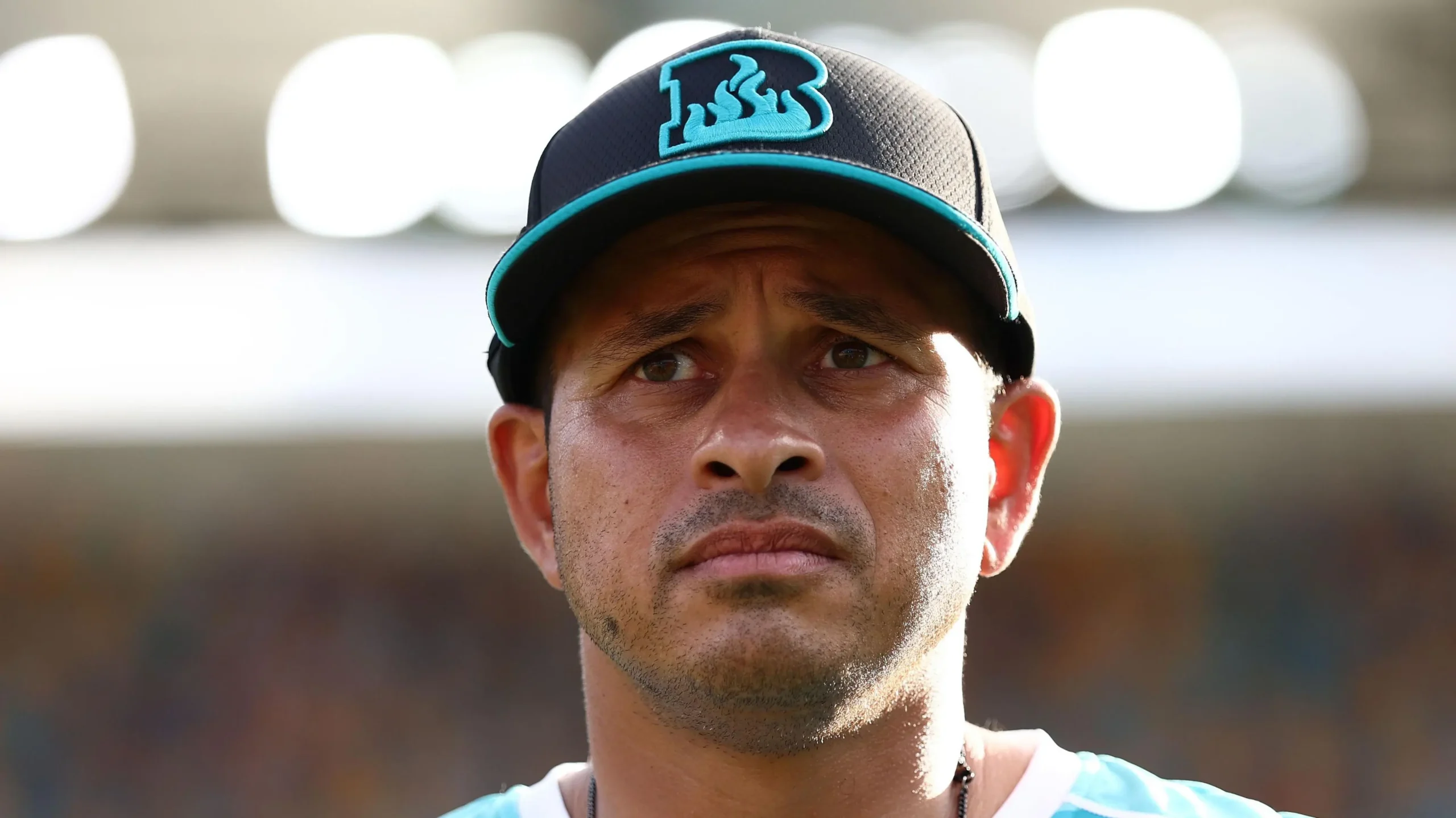
It has been eight years since Australia’s ball-tampering scandal in South Africa, but why does it suddenly feel as though the events of Cape Town are unfolding all over again? Usman Khawaja’s autobiography, Sabr, has brought the controversy back into the open, and what initially appeared to be a discussion about collective responsibility has developed into something considerably bigger. Former players have challenged old findings, current players have defended their positions, and Cameron Bancroft has provided the most detailed account yet of what he says happened behind the scenes.
What makes this particularly complicated is that the people involved do not agree on what everyone knew, when they knew it, or how much responsibility should be shared. Cricket Australia (CA) continues to stand by its original investigation. Pat Cummins insists that not everyone knew about the use of sandpaper. David Warner has questioned the investigation itself. And Khawaja, whose book started the latest debate, says his account is connected to a promise he made to Warner.
It has been an extraordinary two weeks in Australian cricket, with the possibility of more revelations still hanging over the story. To understand how things reached this point, it is worth going back through the sequence of events.
November 6: Khawaja’s autobiography opens an old wound
The first indication of what was coming emerged on November 6, when an interview with Usman Khawaja appeared in Nine newspapers ahead of the publication of his autobiography, Sabr.
Discussing Australia’s ball-tampering scandal, Khawaja made a statement that would become central to the controversy:
“It was all of us. Not the batters, not the bowlers, not the staff. All of us.”
At one level, this sounded like an argument for collective responsibility. The 2018 scandal had damaged Australian cricket’s reputation, and Khawaja appeared to be suggesting that the culture surrounding the team deserved scrutiny beyond the three players who received formal sanctions.
But there was another possible interpretation. Was he saying that everyone knew about the sandpaper plan?
That distinction would soon become the defining disagreement between Khawaja and Cummins.
November 7-9: Lehmann responds, Warner backs Khawaja
The reaction began quickly.
On November 7, former Australia head coach Darren Lehmann spoke to ABC Grandstand. He said he did not believe everyone knew about the plan to use sandpaper and maintained that he had not been aware of it himself.
However, Lehmann added another dimension to the discussion by acknowledging that ball-tampering was widespread in Test cricket.
That did not establish who knew about the specific incident in South Africa, but it raised a broader question about the environment in which the scandal had taken place.
On November 8, Khawaja took to Instagram to clarify his earlier comments. He explained that he meant everyone should have accepted collective responsibility, although he stopped short of denying that everyone knew.
He also revealed why he had decided to speak publicly about the matter.
“I made a promise to my childhood friend David Warner that I would tell the truth, so he could tell a story.”
The reference to Warner was significant. It suggested that Khawaja’s account was not simply an attempt to revisit an uncomfortable chapter of Australian cricket history. There was a personal commitment behind it, too.
The story gathered further momentum on November 9, a day before Sabr was officially published.
News Corp reported additional details from the sandpaper chapter, including the claim that sandpaper had also been used during the preceding Test in Port Elizabeth, now known as Gqeberha.
Warner, meanwhile, responded from Nepal through Instagram. He described everything Khawaja had written as “100% accurate” and said the 2018 investigation had been “botched.”
There was an immediate complication: Cricket Australia had already issued a statement backing the findings of its investigation from eight years earlier.
So the disagreement was no longer simply about what happened on the field. It was becoming a dispute about whether the original investigation had adequately established what happened behind the scenes.
November 10: Khawaja publishes his account, Starc stands by the bowlers
November 10 was publication day for Sabr, and the full picture of Khawaja’s comments became clearer.
The book provided further details about how sandpaper had been used on the second day of the Port Elizabeth Test, during which South Africa lost four wickets for 28 runs.
That detail mattered because it extended the discussion beyond the widely remembered incident in Cape Town.
The 2018 scandal is often associated with the third Test at Newlands, where Cameron Bancroft was caught on television attempting to alter the condition of the ball. But Khawaja’s account brought Port Elizabeth into sharper focus, suggesting that the practice had not been confined to the incident that became public.
Later that day, Mitchell Starc became the first of the active players involved in that series to publicly comment on the latest developments.
His position was straightforward: he stood by the statement issued by Australia’s four frontline bowlers in 2021.
That statement would become an important reference point as the controversy developed, particularly when Cummins addressed the media three days later.
Khawaja also appeared on ABC’s 7.30 Report, where presenter Sarah Ferguson pressed him on the details of his claims. He declined to provide further information and subsequently began cancelling some of his scheduled media appearances.
Perhaps he believed the book had already said enough. Or perhaps the reaction had become more complicated than anticipated. Either way, the public discussion was now moving beyond what Khawaja had written.
November 11-12: Handscomb stays silent as Marsh faces questions
Another person connected to the original events was Peter Handscomb.
Handscomb had been a reserve player for Australia’s first three Tests of the 2018 series. He was also on the field in Cape Town after Bancroft had been caught on television.
On November 11, after scoring a century for Victoria, Handscomb declined to comment on the developing controversy.
His decision was understandable. Being present during an incident does not necessarily mean having complete knowledge of what happened, and players connected to the original series were now facing questions about events from eight years earlier.
The following day, Pat Cummins announced that he would address the media in Sydney on November 13.
But before Cummins could speak, Mitchell Marsh had to deal with questions about the controversy in his capacity as Australia’s ODI captain for the England series.
Marsh faced sustained questioning for approximately six minutes, repeatedly attempting to keep the discussion focused elsewhere.
Eventually, he offered a response that reflected the sensitivity of the situation.
“I know there’s still a lot of people hurting. But now is not the time for me to share my story,” he said.
It was a careful answer, but it also demonstrated how difficult it had become for Australia’s current players to separate their immediate responsibilities from the unresolved questions surrounding 2018.
November 13: Cummins delivers a 68-minute defence
If Khawaja’s autobiography started the latest controversy, Cummins’ press conference on November 13 gave it a new direction.
Speaking in a packed indoor school at Cricket Central in Sydney, the Australia captain spent 68 minutes answering questions. He had already indicated beforehand that he was prepared to continue for as long as necessary.
His central message was unambiguous.
Cummins said Khawaja was “100% wrong” if he meant that everyone knew about the use of sandpaper.
He also accused Khawaja of being “casual” with people’s lives, adding that friends do not behave that way.
This was particularly significant given Khawaja’s explanation that his comments were connected to a promise made to his childhood friend Warner.
Cummins was not simply disagreeing with the interpretation of an old incident. He was challenging the way Khawaja had chosen to tell the story and the implications for the people involved.
During the lengthy press conference, Cummins discussed several aspects of the controversy, including reverse swing, the presence of sandpaper in dressing rooms as a normal item, and his lack of memory of meetings in which Khawaja had asked for collective responsibility.
His explanation was that the presence of sandpaper in a dressing room did not automatically mean that everyone knew it was going to be used to alter the condition of the ball.
That is an important distinction, although it does not necessarily resolve the wider questions.
Cummins also acknowledged one point on which he agreed with Khawaja: Australia’s team culture in 2018 had lost its way.
He accepted that the side had developed a win-at-all-costs mentality and described its culture as having an “ugly underbelly.”
In other words, Cummins was prepared to accept that something had gone wrong at a deeper level without accepting that everyone had known about the specific sandpaper plan.
That distinction is at the heart of the current disagreement.
November 14-15: Warner questions the investigation, Sayers adds another account
Warner was not prepared to let the matter rest.
On November 14, he escalated his criticism of the 2018 investigation, saying it “stinks of a cover up.”
His concern centred on whether Josh Hazlewood, Mitchell Starc and Nathan Lyon had been interviewed as part of the investigation.
Warner’s argument was that he had not been told whether those three bowlers had been questioned.
Cricket Australia continued to stand by its original findings.
Then, on November 15, another important voice entered the discussion.
Chadd Sayers, who played his only Test for Australia in Johannesburg at the end of the 2018 South Africa series, spoke publicly about his version of events.
Sayers provided additional details about carrying sandpaper off the field in Port Elizabeth after Bancroft had used it on the ball.
More importantly, he claimed that, in his view, everyone knew what was happening.
His comments introduced another account that differed from Cummins’ position.
There was now a clear divide between people who believed the knowledge of the incident extended across the team and those who rejected that interpretation.
Sayers’ account was particularly relevant because he had been part of the squad during the series, even though he played only the final Test in Johannesburg.
Meanwhile, Steven Smith returned to Australia from New York, where he had been since the conclusion of the recent South Africa tour.
Smith’s return added another layer of anticipation. As the Australia captain during the 2018 scandal and one of the players who received a suspension, his perspective inevitably remained central to any discussion of the episode.
November 16: Khawaja explains why he wrote the book
A podcast featuring Khawaja was published on November 16. It had been recorded before Cummins’ press conference the previous week.
Khawaja reiterated that his account in Sabr was based on a promise he had made to Warner in 2020.
He also clarified that he had only told Warner what he intended to include in the book two months earlier.
This raised another interesting question.
If Khawaja had made the promise in 2020, why had the story taken so long to emerge? And why had Warner only learned the specific contents of the book relatively recently?
The available information does not provide a complete answer.
What it does establish is that the book was not an impulsive response to the latest debate. Khawaja had been carrying the intention to tell this story for several years, even if the final decision about what to include came much later.
November 18: Cricket Australia offers an independent forum, Bancroft releases 4,500 words
By November 18, the controversy had become sufficiently serious for Cricket Australia to attempt a different approach.
Shortly before the third ODI against England in Hobart, CA organised a press conference involving CEO Todd Greenberg and interim chair David Boon.
They announced an independent forum through which anyone involved in the 2018 events could share what they knew.
It was an interesting development.
CA had repeatedly stood by the original investigation, but the decision to create an independent forum suggested that the organisation recognised the continuing demand for people involved in the episode to have an opportunity to provide their accounts.
However, the announcement was quickly followed by an even more significant development.
A few hours later, Cameron Bancroft released a 4,500-word statement, providing the most detailed account yet of what had taken place.
His statement included conversations involving the bowlers, wicketkeeper Tim Paine, former head coach Darren Lehmann and assistant coach David Saker.
This was important because the discussion was no longer limited to broad claims about collective responsibility. Bancroft was offering details about conversations and interactions involving several members of the team and coaching staff.
He also explained why he had decided to release his account when he did.
“It made me feel angry, betrayed and alone,” Bancroft said, referring to Cummins’ press conference.
Bancroft’s statement appeared to be a response to the way the events had been discussed publicly, particularly Cummins’ rejection of Khawaja’s interpretation.
It also placed the independent forum in an interesting position. CA had just created a space for people to speak, but Bancroft had chosen to publish his account publicly rather than wait for that process.
November 19: Cummins’ agent responds as Bancroft says he feels freed
The following day brought another response from Cummins’ camp.
His agent, Neil Maxwell, issued a statement defending the Australia captain’s position.
“Pat’s position hasn’t changed in eight years,” Maxwell said. “He’s been consistent and adamant from day one. Pat feels for Cam of course. He has been through a lot.”
The statement reinforced the argument that Cummins had not changed his account over the years and that his position was not a reaction to Khawaja’s book.
Later that day, Cummins trained with his New South Wales team-mates at the Sydney Cricket Ground, including Josh Hazlewood.
It was a relatively ordinary cricketing activity taking place against an increasingly extraordinary backdrop.
Bancroft, meanwhile, briefly spoke to a television crew in Perth and said he was feeling “freed.”
Whether that feeling will translate into further revelations remains to be seen. But his lengthy statement had already changed the nature of the conversation.
Why the disagreement is bigger than one incident in Cape Town?
There is a temptation to view the latest developments as a simple disagreement between former team-mates about who knew what in 2018.
But that would miss the bigger issue.
The original scandal involved more than Cameron Bancroft’s actions on the field. It raised questions about leadership, team culture, accountability and the pressure to win.
Smith was captain. Warner was vice-captain. Bancroft was the player caught on television. Lehmann was head coach, while Saker was part of the coaching staff. Cummins, Starc, Hazlewood and Lyon were the frontline bowlers whose roles have now become part of the renewed discussion.
The subsequent investigation and punishments created an official version of events. Yet the latest accounts suggest that some people involved still believe important details have not been fully discussed.
There are also different ways of understanding collective responsibility.
A player might accept responsibility for being part of a team whose culture had become unhealthy without having known about a particular plan. Another might believe that the culture itself made it impossible for senior players to remain unaware of what was happening.
Both arguments can be discussed, but they are not interchangeable.
That is why the disagreement between Khawaja and Cummins matters. Khawaja’s comments can be understood as an argument about the broader culture, while Cummins has insisted that they should not be interpreted as evidence that everyone knew about the sandpaper.
The two positions overlap in some areas but diverge sharply on the central question.
The independent forum may provide another chapter, but will it settle anything?
Cricket Australia’s announcement of an independent forum could offer a way forward.
For an organisation that has continued to support its original findings, allowing those involved to provide additional information may be a practical way of addressing the renewed questions.
But there is no guarantee that another forum will produce a universally accepted account.
People remember events differently. Some may have information they did not previously share. Others may believe they have already explained their positions sufficiently.
And there is a distinction between providing more information and establishing that every disputed claim is true.
The questions surrounding the involvement of the bowlers, the conversations in the dressing room, Bancroft’s account of Port Elizabeth and the extent of the coaching staff’s knowledge are unlikely to disappear simply because an independent process has been announced.
Nor should the existence of differing accounts automatically be treated as proof that the original investigation was deliberately compromised.
That is a serious allegation, and one that requires evidence rather than inference.
The story is still developing
Eight years after the events in South Africa, Australian cricket finds itself revisiting a chapter many would have preferred to leave behind.
Khawaja’s autobiography reopened the discussion. Warner supported his account and questioned the investigation. Lehmann offered his own recollection. Cummins defended the position he says he has maintained since 2018. Starc stood by the four bowlers’ 2021 statement. Sayers added details from Port Elizabeth, while Bancroft released a lengthy account involving conversations with several senior figures.
And through it all, Cricket Australia has maintained its position while offering an independent forum for further discussion.
So where does that leave Australian cricket?
Perhaps the most important point is that the latest controversy is not simply about finding one person to blame. It is about understanding how a team reached a point where winning appeared to take priority over the values it was supposed to represent, and whether the full story of that period has ever been told.
The people involved do not owe the public an explanation for every private conversation. They are a sports team, not a government ministry. But when former and current players make competing claims about one of the most damaging episodes in Australian cricket history, questions are inevitable.
There may yet be more accounts, more disagreements and further clarification through the independent forum.
For now, the story remains unfinished. A lot has been said, much remains disputed, and some of the most important details may still be beyond public knowledge.

Relevant news
MS Dhoni: The Man Who Made the Difficult Look Simple, Through the Eyes of Those Who Played Alongside Him
Few cricketers have been watched as closely as MS Dhoni, and fewer have revealed so…

IPL 2027 Retentions: 184 Players Stay, but the Real Story Lies in the 66 Spots Still Available
With all ten franchises announcing their retained-player lists on November 18, the first major phase…
Australian Cricket’s Mateship Has Cracked: The Sandpapergate Fallout Is Now Bigger Than 2018
Mateship. What happens when the very value that is supposed to hold Australian cricket together…
IPL 2027: Hardik Pandya vs Arshdeep Singh, Which Franchise Got the Better Deal?
The Hardik Pandya-Arshdeep Singh trade has created an interesting question ahead of IPL 2027: who…
India won the series in New Zealand, but how close are they to finding their perfect ODI side?
India won the series in New Zealand. So shouldn't they be leaving Tauranga with more…
USA Cricket Has Been Suspended Four Times. Can a New Board Finally End the Politics?
American cricket has a governance problem that refuses to go away. The United States of…