

Australian Cricket’s Mateship Has Cracked: The Sandpapergate Fallout Is Now Bigger Than 2018
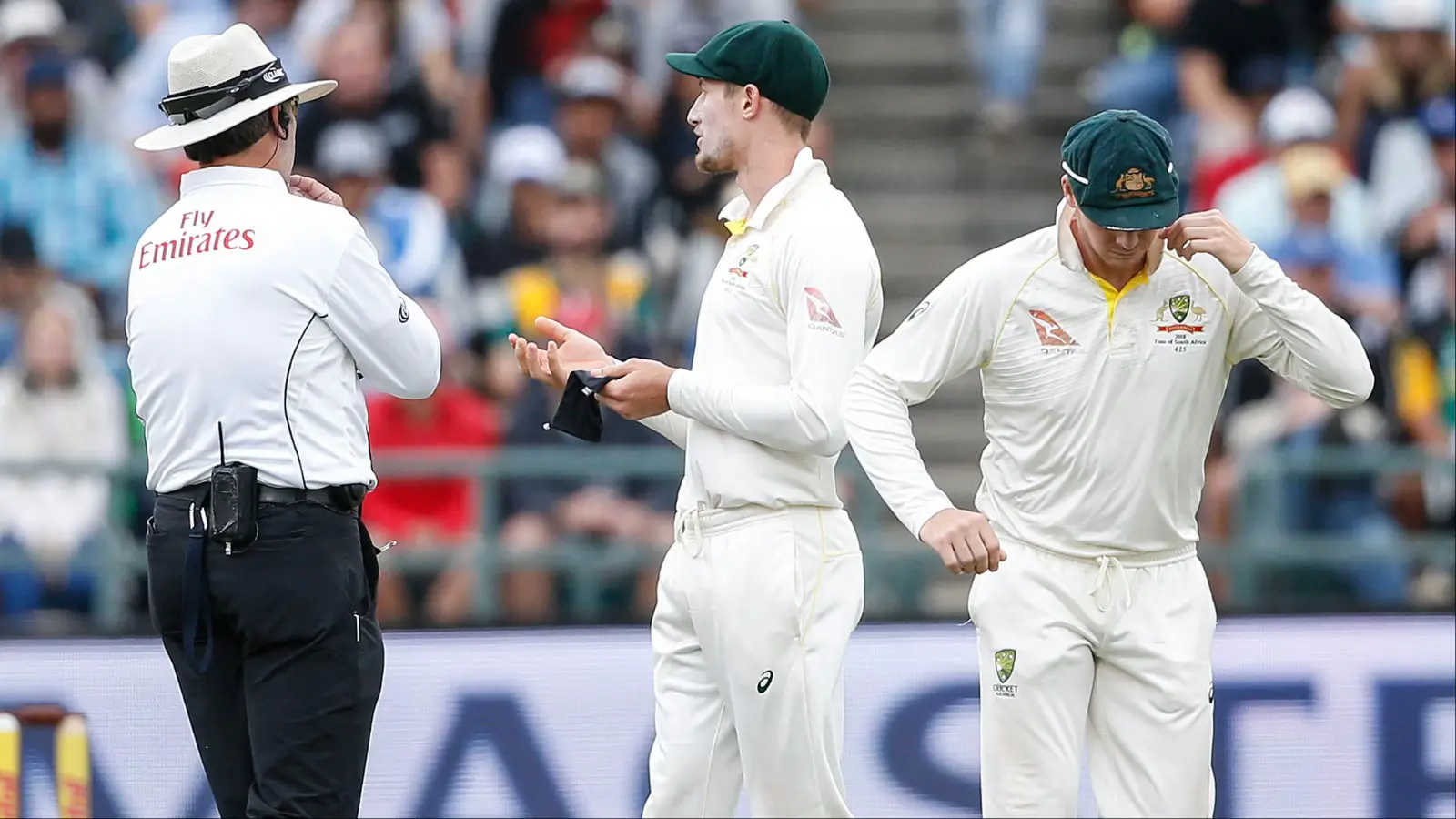
Mateship. What happens when the very value that is supposed to hold Australian cricket together becomes the reason its former teammates are turning against one another?
It is not an Australian invention, nor is it an exclusively Australian concept. But few countries embrace the idea quite as publicly as Australia. Mateship is officially recognised as an Australian value, something citizens are expected to understand and practise. It even features in the country’s citizenship test, where candidates must correctly answer at least one of five questions on Australian values.
Which makes what has unfolded in Australian cricket over the past 10 days particularly uncomfortable to watch.
The renewed controversy surrounding Sandpapergate, the ball-tampering scandal that rocked Australian cricket during the 2018 tour of South Africa, has developed into something considerably bigger than another debate about what happened at Newlands. Former teammates who spent years representing Australia together are now publicly questioning one another’s integrity, recollections and, perhaps most painfully, their understanding of friendship.
At some point, shouldn’t we ask whether Sandpapergate itself has become secondary to the relationships it has exposed?
Because beneath the competing accounts of what happened in South Africa lies a much more difficult story: the apparent collapse of relationships between men who once shared dressing rooms, victories, defeats and the responsibilities of representing their country.
From shared dressing rooms to public disagreements
The most striking aspect of this dispute is the history between the people involved.
Pat Cummins and Usman Khawaja alone played 74 matches across formats for Australia together. That is a considerable amount of time spent sharing dressing rooms, travelling, preparing for matches and experiencing the pressures that come with international cricket.
These are not people who simply crossed paths during one controversial tour. They were teammates for years.
Yet the current disagreement has exposed just how differently some of them remember the events surrounding Newlands in 2018.
On one side are Khawaja and David Warner, with former Australian fast bowler Chadd Sayers now offering support to their position. Their argument centres on what they believe collective responsibility and mateship should have looked like when the scandal unfolded.
On the other side is Cummins, whose comments have raised questions about Khawaja’s own understanding of friendship. His bowling colleagues have also become associated with that position.
The disagreement is no longer limited to recalling who knew what, who said what or who should have done something differently. It has become personal.
And as emotions continue to run high, others connected to that Australian team are increasingly being placed in an uncomfortable position: remain silent or risk appearing to take sides.
It is perhaps why the entire episode has attracted so much attention beyond Australia. A section of the cricket world has been surprised by the almost soap-opera-like nature of the public exchanges.
Australian cricket has always had strong personalities and disagreements. But watching former teammates exchange accusations with this level of personal intensity is something different.
The search for truth, and the problem with competing memories
One of the more frustrating aspects of the entire controversy is how little certainty has emerged despite the enormous amount of public discussion.
Everyone appears to be talking about details. Everyone insists that details matter. Yet the different accounts have largely revolved around personal recollections, interpretations and what individuals believe should have happened.
Cummins made this particularly clear during his 68-minute press conference in Sydney last Friday.
One of his strongest observations was that there were significant gaps in the accounts being presented, arguing that vague recollections could have serious consequences for real people and their lives.
It was a pointed criticism, and one that captures the difficulty with the current debate.
If the objective is to establish what really happened during the 2018 South Africa tour, then the distinction between what someone remembers, what someone witnessed and what someone believes should have happened becomes crucial.
Those are not necessarily the same things.
Warner has described the continuing effort to establish the truth as an important part of this process. But the problem is that every new account seems to create further disagreement rather than bring the matter closer to resolution.
Even Chadd Sayers, who has provided some of the more detailed recollections of the events, has largely spoken about his own involvement and what he believes others should or must have done.
There is an important difference between explaining what you personally experienced and establishing what everyone else knew.
That distinction has been missing from much of the public discussion.
And perhaps the real story lies somewhere in the gaps between these different versions.
It is entirely possible that every individual who has spoken publicly genuinely believes their account is accurate. Human memory, particularly when it involves an emotionally difficult episode from years earlier, is not always a straightforward recording of events.
But sincerity alone cannot establish the complete truth.
David Warner, the reputation that never quite recovered
For David Warner, the renewed discussion carries an additional burden.
The former Australian opener has spent years dealing with the consequences of Sandpapergate and the perception that he was the central mastermind behind one of the biggest scandals in Australian cricket.
That label has followed him long after the original incident.
The controversy has therefore reopened something that Warner may have hoped was finally becoming part of his cricketing past.
Khawaja’s decision to revisit the subject has been particularly significant because he has framed his involvement around a personal promise made to his childhood friend.
According to Khawaja, bringing the matter back into public discussion was connected to seeking justice for the impact the scandal had on Warner’s life and reputation.
That explanation offers an important perspective on why he has chosen to speak now.
However, it also raises another question: can an attempt to defend a former teammate’s reputation avoid reopening old wounds for everyone else involved?
Clearly, the answer has not been straightforward.
The controversy has moved beyond Warner’s individual reputation and into a wider discussion about how the Australian team handled the scandal, what responsibilities its players shared and whether enough was done to support those most affected.
Khawaja’s Sabr: A personal account behind the controversy
To understand why Khawaja’s recent comments have attracted so much attention, it is worth looking at his autobiography, Sabr.
The book is a remarkably personal account of his life and cricketing journey. Rather than presenting a conventional athlete’s autobiography, Khawaja approaches his story through an almost continuous internal conversation about his identity, background, family, faith, beliefs and understanding of himself.
By the time readers reach Chapter 17, where he revisits the South African tour, they have already been introduced to a man who has spent much of his life examining his own experiences and trying to make sense of them.
That context matters.
His recollection of the events surrounding Sandpapergate is not simply another attempt to reconstruct a controversial cricketing episode. It is also an extension of the personal reflection that runs throughout the book.
Khawaja offers new information and explains why he believes the events deserve another examination. Yet he stops short of placing a particularly bright spotlight on specific individuals through details that could directly implicate them.
This creates an interesting tension.
He has shared enough to reignite a major cricketing debate, but perhaps not enough to settle the disagreements that have followed.
And that is where the problem begins.
If the intention is to establish collective responsibility, then the discussion inevitably involves people who may remember the same events very differently.
Khawaja’s account may be sincere and deeply personal. But it does not automatically resolve the questions raised by Cummins or others who disagree with his interpretation.
Two different interpretations of mateship
At the heart of this entire disagreement is a question that is considerably bigger than the ball-tampering incident itself.
What does mateship actually mean when a teammate makes a serious mistake?
For Khawaja and Warner, with Sayers offering support, the argument appears to centre on collective responsibility. Their interpretation suggests that the team should have stood together and acknowledged the broader circumstances surrounding what happened in 2018.
It is an argument about solidarity, accountability and the responsibility teammates have towards one another.
Cummins, meanwhile, has questioned whether Khawaja’s approach is consistent with genuine friendship.
His criticism of the way Khawaja has revisited the issue reflects a different understanding of what standing by a mate should involve.
There is a legitimate question on both sides.
Does mateship mean accepting collective responsibility when one member of a team is affected by a scandal? Or does it also mean protecting a friend from public criticism, particularly when the details remain disputed?
And what happens when standing up for one friend means disagreeing with another?
That is the uncomfortable position Australian cricket finds itself in.
The disagreement is no longer simply between individuals with different recollections. It is about competing ideas of loyalty.
Khawaja appears to believe that speaking out is part of standing by Warner. Cummins appears to question whether the manner in which he has done so is itself a failure of friendship.
Neither interpretation can be fully evaluated without understanding the details that remain unclear.
And those details are precisely what the public still does not have.
Why Cameron Bancroft’s account matters?
There is another important voice still expected to enter the discussion: Cameron Bancroft.
As the player directly involved in the ball-tampering incident at Newlands, his account could potentially add another perspective to the competing recollections.
Bancroft is expected to provide his detailed version of events sometime soon.
Naturally, that raises expectations.
Could his account finally clarify some of the disputed circumstances surrounding the 2018 tour? Could it help establish what different members of the team knew and when they knew it?
Possibly.
But there is no guarantee that another recollection, however detailed, will settle the disagreement.
The problem is not simply the absence of people willing to speak. It is the difficulty of reconciling accounts that are based on different experiences, memories and interpretations.
Even if Bancroft provides additional information, those who disagree with his version may continue to maintain their own recollections.
And unless the missing details can be independently established, the public could end up with another chapter of competing explanations rather than a definitive conclusion.
Interestingly, many of the other individuals associated with that South African tour have chosen to remain silent or avoid being drawn into the discussion. Apart from Sayers, there has been little appetite among the other participants to publicly revisit the events in comparable detail.
Perhaps they believe silence is preferable. Perhaps they simply do not want to become part of a dispute that appears increasingly difficult to resolve.
Who knows? Australian cricket figures are notoriously tight-lipped about certain matters, and they do not owe the public an explanation for every personal disagreement. They are a sporting team, not a government ministry.
Still, the absence of additional voices leaves plenty of unanswered questions.
When Sandpapergate becomes bigger than the original scandal?
There is a reason the current developments feel so significant.
Sandpapergate was already one of the defining controversies in modern Australian cricket. It affected individual careers, damaged reputations and raised questions about the culture and accountability of the national team.
But the current dispute has shifted attention towards something that the original scandal did not necessarily resolve: the personal relationships left behind.
Eight and a half years after Newlands, former teammates are still dealing with the consequences of what happened, albeit in very different ways.
For Warner, the issue has remained closely connected to his reputation. For Khawaja, revisiting it appears to be connected to friendship and a desire to challenge what he considers an incomplete understanding of the past. For Cummins, the manner in which those events are being discussed has created its own set of questions about loyalty and responsibility.
These are very different motivations.
And perhaps that is why a straightforward resolution has remained so elusive.
The original incident may have taken place in 2018, but its consequences have continued to develop in the years since. The current arguments suggest that some of the tensions were never entirely addressed.
It is tempting to treat this as a simple disagreement between former teammates. But that would overlook the years of shared experiences and the emotional baggage attached to a scandal that affected Australian cricket at every level.
The public sees the arguments. What it cannot see is everything that happened between these men in the intervening years.
That may be where some of the most important answers lie.
The final question: What happened to Australian cricket’s mateship?
Perhaps the most revealing aspect of this entire episode is that everyone involved appears to believe they are defending something important.
Khawaja and Warner are attempting to challenge an account of events they believe has been unfair to their friendship and the people affected by the scandal.
Cummins is questioning whether the way the matter has been brought back into public discussion is consistent with the loyalty expected between teammates.
Sayers has offered his own recollections and perspective, while Bancroft’s expected account could introduce another important dimension.
But there is no clear indication that these different positions are moving towards a common understanding.
And that leaves Australian cricket with a rather uncomfortable contradiction.
Mateship is celebrated as one of the country’s defining values. It is something that Australian cricket has often appeared to embrace through its team culture. Yet the people now debating what it means spent years sharing the same dressing rooms and representing the same country.
So, what went wrong?
Was the original disagreement never properly resolved? Did different individuals carry different versions of the same events for years? Or has the renewed discussion simply exposed personal tensions that were always present beneath the surface?
We may never know the complete answer.
What is clear is that the Sandpapergate debate has become about much more than what happened at Newlands in 2018. It is now about friendship, loyalty, accountability, reputation and the difficult choices that emerge when personal relationships collide with public responsibility.
And perhaps that is the saddest part.
The men involved have every right to remember events differently. They have every right to defend their own reputations and challenge accounts they believe are inaccurate.
But when former teammates begin questioning not just each other’s memories but their understanding of friendship itself, the damage becomes considerably harder to repair.
A lot has been said. Much remains unclear. Some relationships may never return to what they once were.
And in a controversy that began with a search for the truth, the one thing Australian cricket appears to be missing is a shared understanding of what actually happened.
A lot, much of it hard to explain, much of it beyond anyone else’s control, and perhaps more still to come.

Relevant news

IPL 2027: Hardik Pandya vs Arshdeep Singh, Which Franchise Got the Better Deal?
The Hardik Pandya-Arshdeep Singh trade has created an interesting question ahead of IPL 2027: who…

India won the series in New Zealand, but how close are they to finding their perfect ODI side?
India won the series in New Zealand. So shouldn't they be leaving Tauranga with more…

USA Cricket Has Been Suspended Four Times. Can a New Board Finally End the Politics?
American cricket has a governance problem that refuses to go away. The United States of…

What’s Happening with Mohammed Siraj?
What's happening with Mohammed Siraj? That's a reasonable question to ask as India prepares for…

Brian Lara vs Sachin Tendulkar: Who Was the Greatest Test Batsman of All Time?
The debate over Brian Lara vs Sachin Tendulkar is one of the most fascinating discussions…
Virat Kohli’s New ODI Batting Approach: How He Is Unlocking Another Gear Ahead of 2027
Virat Kohli has spent nearly two decades establishing himself as one of the greatest batters…