

Manvanth Kumar: How Karnataka’s Surprise Ranji Trophy Pick Is Emerging as a Promising All-Rounder
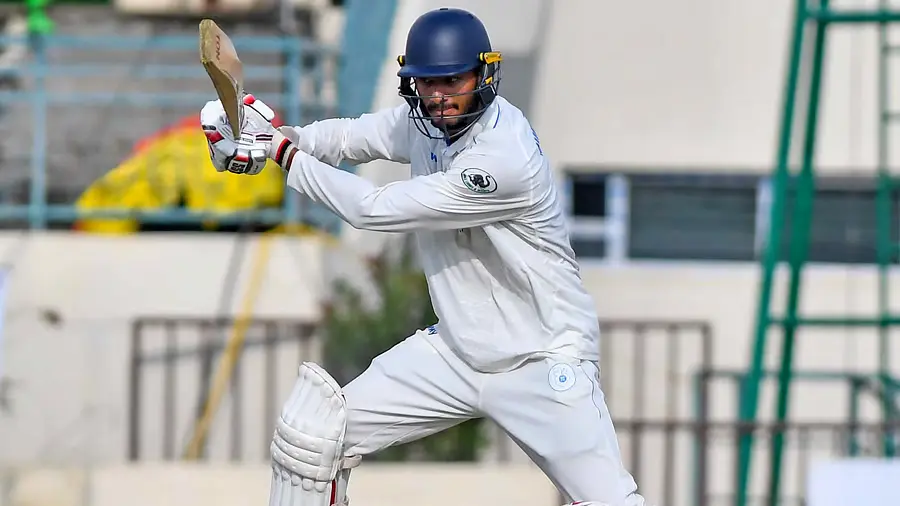
Manvanth Kumar was not expecting to feature in Karnataka’s opening matches of the Ranji Trophy season. Having missed out on the list of probables and struggled to find consistent form in the lead-up to the tournament, the 22-year-old was preparing to focus on the Col. CK Nayudu U23 Trophy instead. However, an unexpected call-up to Karnataka’s 15-member squad changed his immediate plans.
Three matches into the campaign, Manvanth has become one of the biggest positives for Karnataka. The left-handed batter and seam-bowling all-rounder has delivered when the team needed him, producing important contributions with both bat and ball. From rescuing Karnataka against Saurashtra to helping secure their first win against Tripura, he has demonstrated an ability to handle different match situations.
What makes his early Ranji Trophy performances particularly interesting is the way he has approached responsibility. Rather than limiting himself to a particular role, Manvanth has shown a willingness to adapt according to the team’s requirements. That combination of batting intent, bowling discipline and composure under pressure could make him an important player for Karnataka in the longer format.
Manvanth Kumar’s unexpected Ranji Trophy selection changed everything
Before receiving his Ranji Trophy call-up, Manvanth was preparing for a different challenge. His immediate objective was to perform well in the Col. CK Nayudu U23 Trophy and force his way into Karnataka’s senior side through strong individual performances.
He had hoped to produce something extraordinary, whether through a big innings or multiple five-wicket hauls. Instead, the opportunity arrived earlier than expected when his family informed him that his name had appeared in Karnataka’s 15-member squad.
The selection was a significant development for a player who had spent considerable time trying to establish himself in senior domestic cricket.
Manvanth did not take long to make an impression. Karnataka handed him an unexpected promotion to No. 3 in their opening match against Andhra. With experienced batters Mayank Agarwal and KL Rahul dismissed early in the second innings, the responsibility fell on the young all-rounder to help stabilise the innings.
He responded with a patient 44, showing that he could adjust his natural batting approach when the situation demanded it.
For a player making his way into the senior red-ball setup, this was an important first step. Batting higher up the order against experienced domestic opposition requires concentration and an understanding of match conditions. His innings against Andhra offered an early indication that he could handle responsibility beyond his usual role.
Manvanth Kumar’s 86 and century against Saurashtra showcased his batting ability
Manvanth’s most significant batting contribution came in Karnataka’s next match against Saurashtra.
Walking in at 187/7, he found himself in a difficult position. The dismissal of Karun Nair soon after his arrival added further pressure, leaving Karnataka with limited batting resources.
However, Manvanth refused to allow the situation to dictate his approach.
He initially scored quickly, reaching 22 off just 10 deliveries. He used his feet against the spinners, stepped out of his crease and took the attack to experienced left-arm pacer Jaydev Unadkat.
His approach was not simply about scoring quickly. It was about recognising opportunities and responding to the delivery in front of him.
That distinction is important in red-ball cricket. Aggressive batting does not always mean playing attacking shots regardless of the situation. It requires understanding when to defend, when to rotate the strike and when to put pressure back on the bowler.
Manvanth’s partnership with Abhilash Shetty demonstrated this understanding.
While Manvanth continued to score, Abhilash played a contrasting innings, finishing the opening day on 6 off 85 balls. His responsibility was to hold one end together while Manvanth kept Karnataka moving.
The two communicated regularly about their approach. Abhilash was sometimes tempted to attack when the fielders came up, particularly against the left-arm spinner. However, the dressing room had clearly instructed him to protect his wicket and provide stability.
Manvanth also encouraged his partner to remain at the crease.
This partnership eventually helped Karnataka reach 281 by stumps, with Manvanth contributing 86 runs. He went on to complete a century the following day.
Why the Saurashtra innings matters
From a cricketing perspective, this innings revealed more than Manvanth’s ability to score runs.
There were three particularly encouraging aspects:
- Composure under pressure: Arriving at 187/7, he understood that Karnataka needed someone to take responsibility rather than surrender to the situation.
- Ability to counterattack: His early aggression against the spinners and Unadkat prevented the bowling side from dictating the tempo throughout the innings.
- Partnership awareness: He recognised Abhilash’s role and understood that one batter needed to stay at the crease while the other continued scoring.
The third point deserves attention. A lower-order partnership in red-ball cricket often depends on players understanding their individual responsibilities. Manvanth’s innings showed that he was not focused solely on his personal score. He also understood what Karnataka needed from the partnership.
For a young all-rounder trying to establish himself in first-class cricket, that awareness is a valuable quality.
Three wickets and a quick 51 against Tripura strengthened his case
One good performance can create excitement around an emerging player, but consistency is what makes a breakthrough meaningful.
Manvanth’s next outing against Tripura was therefore an important opportunity to show that his performance against Saurashtra was not an isolated achievement.
He responded with contributions in both departments.
With the new ball, Manvanth bowled a disciplined spell and picked up three wickets in the innings. Later, he added a quick 51 with the bat, helping Karnataka extend their advantage.
His performance played a significant role in Karnataka securing their first victory of the Ranji Trophy campaign.
The value of this contribution lies in the balance he brings to the team. Karnataka did not need him to produce another century. Instead, he contributed with the ball when wickets were required and scored useful runs when the team needed to strengthen its position.
This is precisely the kind of flexibility teams look for in a seam-bowling all-rounder.
A specialist batter may offer greater consistency in one department, while a specialist bowler may provide a more established bowling option. An all-rounder capable of delivering meaningful contributions in both areas gives the team additional selection flexibility.
Manvanth’s early performances suggest that he could develop into such an option for Karnataka.
Who is Manvanth Kumar? His journey from Mysuru to Karnataka’s senior team
Born and raised in Mysuru, Manvanth developed an interest in cricket at an early age. He followed his elder brother Hemanth into the sport and took up cricket full-time when he was 12.
He initially developed as a top-order batter at the age-group level while continuing to work on his bowling. However, his bowling gradually became his primary strength.
Standing at 6 feet 2 inches, Manvanth has a natural physical advantage as a seam bowler. His height allows him to extract bounce and trouble batters, while his reach also provides certain advantages when batting.
He developed his game under S Balachander at RBN Cricket Club, where he worked on both aspects of his all-round ability.
His early progress eventually brought him into the Maharaja Trophy, where he made a major impression.
Breakthrough season with Hubli Tigers in Maharaja Trophy 2023
Manvanth’s first major breakthrough came during the 2023 Maharaja Trophy season with Hubli Tigers.
He finished as the joint highest wicket-taker in the tournament, claiming 22 wickets.
His performances stood out for several reasons. He showed composure in the death overs, developed an effective knuckle ball and demonstrated an ability to challenge batters with spin bowling.
His athleticism in the field also added to his overall value.
These performances brought him greater recognition. Soon after, he was invited to bowl to the Indian team in the nets ahead of its departure for the Asian Games.
He subsequently progressed into Karnataka’s U23 setup and played an important role in the team’s Col. CK Nayudu Trophy triumph during the 2023-24 season.
However, moving from age-group cricket to the senior team was not immediate.
It took more than a year for him to establish a place in Karnataka’s senior setup, with only sporadic appearances in the white-ball formats over the following two seasons.
The transition to senior domestic cricket presented its own challenges, and Manvanth continued working towards a more regular opportunity.
How Vinay Kumar helped Manvanth Kumar find confidence in red-ball cricket?
An important factor behind Manvanth’s early success has been the clarity provided by Karnataka head coach Vinay Kumar.
The two have worked together consistently in the Maharaja Trophy, giving the coach an opportunity to understand Manvanth’s strengths, temperament and potential.
Vinay’s message to the young all-rounder has been straightforward: play freely and express yourself.
He has not imposed restrictions on how Manvanth should approach his batting. Instead, he has encouraged him to trust his instincts and take responsibility for his decisions.
The message has been particularly valuable during Manvanth’s transition into senior red-ball cricket.
When a young batter enters a senior domestic dressing room, there can be pressure to follow a particular approach. A player who has traditionally played aggressively may become overly cautious, while someone who prefers to build an innings may struggle when asked to increase the scoring rate.
Vinay’s approach appears to have given Manvanth the freedom to make decisions according to the match situation.
From a coaching perspective, this is a sensible way to develop a young all-rounder. Players need clarity about their responsibilities, but they also need enough freedom to use their natural strengths.
Manvanth’s performances against Andhra and Saurashtra suggest that he has responded positively to this confidence.
Manvanth Kumar’s batting philosophy: Intent matters more than scoring rate
One of the most interesting aspects of Manvanth’s approach is his definition of intent.
He believes batting is about watching the ball, reacting to it and committing to the decision.
For him, intent does not necessarily mean maintaining a high scoring rate or attacking every delivery. It is about responding according to the merit of the ball.
This is an important distinction, particularly in first-class cricket.
A batter needs to recognise when the conditions favour attacking shots and when the situation requires patience. The ability to switch between these approaches separates a flexible batter from someone who relies on only one method.
Manvanth’s innings against Saurashtra offered a good example. He attacked early when the field allowed him to take on the spinners, but he also recognised the importance of building a partnership with Abhilash Shetty.
His preparation routine also reflects this understanding.
He tries to replicate match conditions during net sessions rather than treating practice as a simple exercise in facing deliveries. While batting, he thinks about shot selection, identifying bowlers to target and responding when the ball moves.
This approach helps him prepare for different situations before encountering them during a match.
His preference for treating nets like a match also reflects an effort to build the physical and mental readiness required for longer-format cricket.
Maharaja Trophy pressure situations shaped his temperament
Manvanth’s ability to contribute under pressure did not begin with his Ranji Trophy performances.
He has already experienced several high-pressure situations in the Maharaja Trophy, particularly with Hubli Tigers.
In the 2023 final, he bowled a successful final over. The following season, he was involved in a remarkable triple-Super Over contest in which he once again emerged as a key performer.
He scored an unbeaten 27 and picked up four wickets before hitting the winning boundary off the final delivery of the third Super Over.
These experiences are significant because they demonstrate his willingness to take responsibility when the outcome of a match is uncertain.
T20 cricket often places players in situations where one delivery can change the result. Bowling a final over, defending a target or batting under pressure requires quick decisions and confidence.
Manvanth’s previous performances in such circumstances may have helped him develop the temperament now visible in his Ranji Trophy outings.
He has also spoken about how these situations seem to find him.
That sense of embracing pressure is an encouraging sign for an all-rounder. Rather than avoiding difficult moments, he appears to enjoy being involved when his team needs someone to step forward.
Why Ben Stokes is Manvanth Kumar’s cricketing inspiration?
Manvanth looks up to former England captain Ben Stokes, although his admiration is based more on Stokes’ attitude than his technical abilities.
He particularly values the way Stokes contributes in different situations.
Whether it is taking a crucial wicket, scoring a valuable 30 or 40, producing a run-out or supporting the lower order, Stokes has built a reputation for making important contributions.
Manvanth specifically admires his never-give-up mentality and the way he continues fighting for his team.
He also refers to Stokes’ famous partnership with Jack Leach during the 2019 Headingley Test as an example of his ability to perform under pressure.
This preference offers some insight into Manvanth’s own cricketing mindset.
His early Ranji Trophy performances have followed a similar team-first approach. Against Andhra, he helped stabilise the innings. Against Saurashtra, he took responsibility in a difficult batting situation. Against Tripura, he contributed with both bat and ball.
It is too early to draw direct comparisons between the two players, but the qualities Manvanth admires are visible in the way he approaches his responsibilities.
What Manvanth Kumar learned from his IPL 2025 experience with Delhi Capitals
Manvanth’s rise through domestic cricket also brought him an opportunity with Delhi Capitals in IPL 2025.
Although he did not feature in a playing XI, the experience gave him an opportunity to observe high-level T20 batting closely.
One of his biggest takeaways was the need for bowlers to keep evolving.
Watching batters repeatedly clear the boundary reinforced his belief that even an excellent bowler cannot rely on the same four or five variations throughout a T20 career.
He also understood how small moments can influence a T20 match.
A single delivery, a poor shot or an incorrect decision can change the direction of a contest considerably.
This is an important lesson for a young seam-bowling all-rounder.
Modern T20 cricket places considerable pressure on bowlers to adapt. A variation that works against one batter may not produce the same result against another. Bowlers need to understand match situations, assess batting approaches and keep developing their skills.
Manvanth’s knuckle ball and his experience in the death overs already provide useful elements to his bowling profile. His IPL exposure appears to have strengthened his understanding that continued improvement is necessary to remain effective in the format.
Manvanth Kumar’s move to Bengaluru and his development as an all-rounder
Another important development in his career came in 2026 when Manvanth relocated from Mysuru to Bengaluru.
The move was connected to his job at the Rail Wheel Factory, but it also allowed him to access better cricket practice facilities.
For a young domestic cricketer balancing professional responsibilities and sporting ambitions, access to suitable training facilities can be valuable.
Manvanth’s journey has not followed a straightforward path from age-group success to senior-team recognition. Despite his impressive Maharaja Trophy performances and contributions to Karnataka’s U23 setup, he had to wait for his opportunity in the senior team.
His move to Bengaluru was another step in adapting to the demands of his career.
At 22, he still has considerable room to develop his batting and bowling. His height, seam-bowling ability and left-handed batting make him an interesting profile for Karnataka.
However, the next stage of his development will depend on how consistently he can translate these attributes into performances across the domestic season.
What makes Manvanth Kumar an important prospect for Karnataka?
Manvanth’s early Ranji Trophy performances have highlighted several qualities that make him a valuable option for Karnataka.
- A genuine seam-bowling all-rounder
His ability to contribute in both departments gives Karnataka greater flexibility. His three wickets and 51 runs against Tripura demonstrated how he can influence a match without depending on just one skill.
- Height and bounce
At 6’2″, Manvanth has the physical attributes to extract bounce as a seam bowler. His height also gives him reach while batting.
- Left-handed batting option
His left-handed batting provides another dimension to Karnataka’s batting combination, particularly when he is used in different positions.
- Ability to handle pressure
His performances in the Maharaja Trophy, especially the triple-Super Over contest, have already exposed him to high-pressure situations. His Saurashtra innings further demonstrated his ability to respond when the team is struggling.
- Adaptability across formats
His experience in the Maharaja Trophy, IPL environment and Ranji Trophy gives him exposure to different demands of the game. More importantly, he understands that batting and bowling approaches need to change according to the format.
These qualities make him an interesting player to follow. However, his biggest challenge now is to turn an impressive start into sustained performances.
Can Manvanth Kumar become a regular performer for Karnataka?
Manvanth has made a strong early impression, but three Ranji Trophy matches are only the beginning of his first-class journey at the senior level.
The challenge now is to maintain the same level of commitment and performance against different opponents and under varying match conditions.
His batting will need to continue developing, particularly his ability to handle different bowling attacks over longer periods. As a seam bowler, maintaining discipline with the new ball and developing variations for different situations will remain important.
Karnataka’s coaching staff will also have to decide how best to use his all-round abilities. His promotion to No. 3 against Andhra showed that he can be trusted with additional batting responsibility, while his performances against Saurashtra and Tripura demonstrated his value lower down the order.
This flexibility could become an important advantage.
There is also a positive sign in the way he approaches the game. Manvanth has repeatedly spoken about giving 100 per cent whenever he gets an opportunity and doing whatever the team requires.
That attitude, combined with his existing skill set, gives him a good foundation to build on.
For now, it would be premature to make big predictions about his future. But his performances have given Karnataka a promising seam-bowling all-rounder who has already shown that he can influence matches in more than one way.
Final Verdict: Manvanth Kumar’s Ranji Trophy breakthrough could be just the beginning
Manvanth Kumar’s emergence has been one of the encouraging developments in Karnataka’s early Ranji Trophy campaign.
His journey from missing the list of probables to becoming an important contributor in the senior side highlights the value of staying prepared for opportunities, even when they arrive unexpectedly.
The 86 and century against Saurashtra, the patient 44 against Andhra and the three wickets followed by a quick 51 against Tripura have provided a strong introduction to his first-class abilities.
More importantly, his performances have reflected the qualities he values most: intent, adaptability, resilience and a willingness to take responsibility.
Karnataka will be looking for more consistent results after their first win, and Manvanth has an opportunity to become an important part of that effort.
His immediate priority should be to build on this promising start rather than get carried away by the attention surrounding his performances.
At 22, he has time to improve, learn and establish himself. If he continues to combine his batting contributions with disciplined seam bowling, Manvanth Kumar could develop into a valuable all-round option for Karnataka across formats.

Relevant news
Australia’s 288-Run Chase: How the Hard Grind Against South Africa Revealed a Winning Blueprint?
Australia have 288 runs to chase against South Africa in the final Test at Cape…
Jasprit Bumrah Chucking Controversy: How He Changed His Bowling Action?
Jasprit Bumrah is known for his unusual bowling action, awkward run-up and ability to generate…

Why Early Cricket Training in India Needs a Rethink?
Vaibhav Sooryavanshi has given Indian cricket fans another remarkable teenage success story. At just 15,…
Mitchell Starc’s Day of Extremes in Cape Town: How Australia’s Fast Bowler Turned the Tide
Mitchell Starc experienced two contrasting spells on the same day in Cape Town. First, South…
Harpreet Brar’s seven-year IPL wait for a settled role
For seven IPL seasons, Harpreet Brar has remained one of Punjab Kings' few constants. The…
Why India Missed the Women’s T20 World Cup Semifinals?
India entered their final league match knowing only a win against Australia would keep their…