
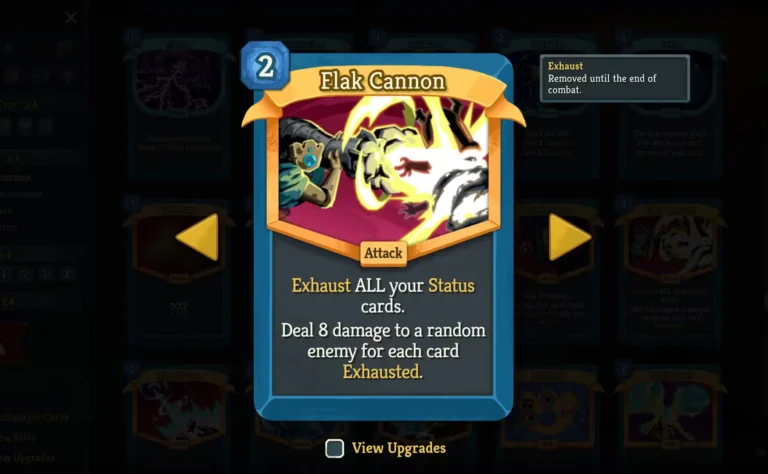
Let’s face it: nothing tanks a perfectly crafted combo deck faster than drawing a hand full of Dazed. If you’ve spent any time grinding Ascensions in Slay the Spire (and eagerly prepping for Slay the Spire 2), you know that Status cards are the run-killers hiding in plain sight.
They bloat your deck, brick your draws, and sometimes flat-out burn you to death. But Status cards aren’t just a frustrating annoyance—they are a core mechanic that separates the Spire slayers from the Spire fodder. Whether they are being shoved into your discard pile by a sadistic Taskmaster or you are deliberately generating them for a massive Ironclad damage spike, understanding how to manage, mitigate, and weaponize Status cards is mandatory for high-level play.
Editor’s Recommendations:
- How Does Co-Op Work: Slay the Spire 2 Multiplayer Guide
- How to Break Slay the Spire 2 With the ‘Howl From Beyond’ Card
Here is your definitive overview of how Status cards function and how to handle them.
| Status Card Mechanic | How It Works | The Gamer’s Playbook |
| Duration | Added to deck/discard/draw pile mid-combat and vanish when the fight ends. | Unlike Curses, do not waste shop gold or campfire visits trying to remove them. |
| Core Threat | Deck bloat. They reduce the probability of drawing your actual deck. | Prioritize heavy card draw and Exhaust mechanics to filter them out quickly. |
| Playability | Most are unplayable (Wound, Dazed, Burn, Void), though Slimed costs 1 Energy to exhaust. | Draft a Medical Kit relic from the shop to play and Exhaust them for zero energy. |
| Upgrades | Statuses generally cannot be upgraded. | The exception is the Hexaghost boss, whose Inferno attack upgrades Burns to deal 4 damage. |
| Strategic Value | Can be leveraged as fuel for specific character builds. | Draft cards like Evolve or Fire Breathing on the Ironclad to turn them into an engine. |
Where Are These Status Cards Coming From?
Understanding enemy attack patterns is half the battle in Slay the Spire. Status cards don’t just magically appear; they are telegraphed. Here is a breakdown of who is ruining your deck and how.
The Spire’s Worst Offenders (Enemies)
The most dangerous Status-generators are the ones that disrupt your scaling during elite and boss fights.
- The Sentries (Elites): These Act 1 geometry nightmares flood your discard pile with Dazed. If you don’t kill the outer Sentries quickly, your second deck cycle will be entirely unplayable.
- Taskmaster (Elite): The red slaver in Act 2 whips Wounds into your discard pile every single turn. This is a primary reason why burst damage is required for Act 2.
- Book of Stabbing (Elite): Its Painful Stabs passive drops a Wound into your discard pile every time you take unblocked damage.
- Nemesis (Elite): Drops massive amounts of Burns (3 to 5, depending on Ascension) into your discard pile.
- Slime Boss & Hexaghost (Bosses): Slime Boss covers you in Slimed, while Hexaghost fills your deck with Burns based on your Turn 1 HP.
- Corrupt Heart (Final Boss): Its Debilitate attack drops one of every Status card (5 total) straight into your draw pile, immediately threatening your next turn.
Self-Inflicted Sabotage (Cards & Relics)
Sometimes, the call is coming from inside the house. You can willingly add Statuses to your deck in exchange for massive, under-costed benefits.
Ironclad Aggro: Cards like Wild Strike (massive damage for 1 energy) and Power Through (massive block) shuffle Wounds into your deck. Reckless Charge does the same with Dazed, and Immolate drops a Burn.
Defect Energy Generation: TURBO gives you a massive energy spike but drops a Void into your discard pile, which will sap your energy later. Overclock gives you cheap card draw at the cost of a Burn.
Mark of Pain (Boss Relic): Gives you an extra energy every turn, but adds 2 Wounds to your draw pile at the start of combat.
Turning Trash Into Treasure
You don’t always have to play the victim. The Ironclad, in particular, is built to turn enemy debuffs into a win condition. If you draft the right cards, you will actively want enemies to give you Status cards.
- Evolve (Power): Whenever you draw a Status, you draw 1 (or 2 if upgraded) cards. This completely negates the “deck bloat” aspect of Status cards. A hand of Wounds instantly replaces itself with your actual deck.
- Fire Breathing (Power): Whenever you draw a Status or Curse, deal 6 (or 10 if upgraded) damage to ALL enemies. Against the Sentries or Slime Boss, this power alone wins the fight.
- Medical Kit (Relic): This shop relic is a run-winner. It allows you to play Status cards for 0 energy, exhausting them immediately. It triggers synergy with Exhaust-focused relics like Dead Branch and Charon’s Ashes.
FAQs
Q: Hexaghost keeps burning me to death on higher Ascensions. What am I doing wrong?
You are probably playing too many powers or taking too much damage early. Hexaghost’s Turn 1 attack deals damage based on your current HP. More importantly, its Sear attack adds Burns, and its Turn 9 Inferno attack upgrades all Burns in your deck to deal 4 damage each. You need to treat Hexaghost as a pure DPS check. Stop trying to set up a 10-turn scaling engine and just hit it as hard as you can before Turn 9.
Q: Is the Mark of Pain boss relic a trap?
Yes and no. If you are running a tight, 15-card infinite deck, Mark of Pain is absolute suicide because those two Wounds will brick your draw pile immediately. However, if you have Evolve, Fire Breathing, or Medical Kit, Mark of Pain is essentially free energy with zero downside.
Q: I’m playing Defect. Should I be scared of playing TURBO and getting Voided?
Not if you are playing it correctly. Void only drains 1 energy when drawn. The idea behind TURBO is to use the massive energy spike to set up your powers (like Echo Form or Defragment) or finish the fight before you even cycle your deck to draw the Void. If the fight ends, the Void doesn’t matter.