
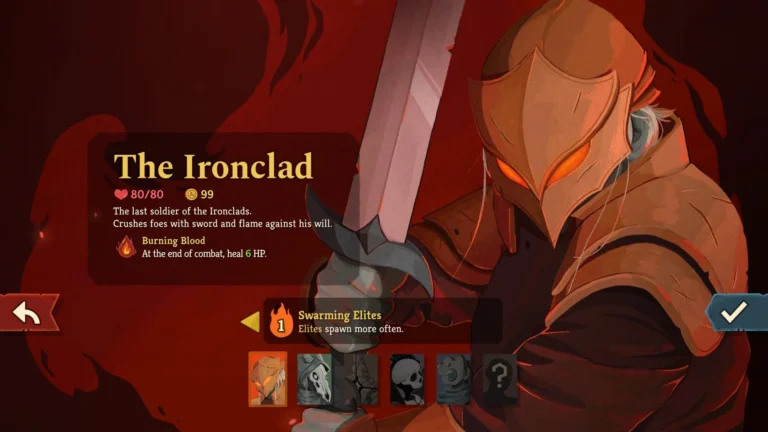
The Ironclad is back. The stalwart, heavy-hitting powerhouse returns in Slay the Spire 2, proving that sometimes all you need to conquer the Spire is a demonic pact, massive physical damage, and hellish resilience. As the most beginner-friendly character on the roster, his core identity remains intact: manipulate your HP, scale your Strength to the moon, and abuse Exhaust synergies to thin your deck into a lethal weapon.
Equipped once again with his signature starting Relic, Burning Blood (which provides a reliable post-combat heal), the Ironclad offers a low floor for newcomers but plenty of explosive, high-ceiling combos for veterans looking to optimize their ascension climbs.
Here is everything you need to know to pilot the Ironclad to victory.
The Ironclad Blueprint: Quick Build Overview
| Archetype | Core Strategy | Essential Cards | Top Relics | Pilot Difficulty |
| Strength | Buff base attack damage to turn multi-hits into one-shot kills. | Demon Form, Twin Strike, Whirlwind | Brimstone, Anchor | Easy |
| Block | Stack armor to negate damage and weaponize it via Body Slam. | Body Slam, Barricade, Juggernaut | Cloak Clasp, Pael’s Legion | Medium |
| Exhaust | Burn cards to trigger passive buffs and cycle your deck. | Corruption, Dark Embrace, Feel No Pain | Charon’s Ashes, Joss Paper | Hard |
| Bloodletting | Sacrifice HP for massive AoE damage and raw power scaling. | Rupture, Inferno, Breakthrough | Centennial Puzzle, Demon Tongue | Hard |
| Strike | Horde “Strike” cards to juice up a single, massive nuke. | Perfected Strike, Pommel Strike | Strike Dummy, Pyre | Easy |
Ironclad Strengths & Weaknesses
Before committing to a deck, it’s vital to understand what the Ironclad naturally excels at and where the Spire will punish him.
Strengths: Easy to pilot, passive healing after every combat, straightforward and reliable scaling mechanics.
Weaknesses: Exhaust mechanics can be punishing if mismanaged; considered to have a slightly lower ceiling for infinite loops compared to other characters.
Top Ironclad Builds in Slay the Spire 2
The Ironclad’s card pool in the sequel heavily emphasizes converting resources—whether that’s health, energy, or the cards themselves—into raw power. Here is a breakdown of the most reliable builds to carry your run.
1. The Strength Build (The Classic Bruiser)
Strength remains the Ironclad’s bread and butter. By generating a flat damage increase to all attacks, multi-hit abilities become game-ending sequences. The game plan is simple: survive the setup phase, pop your buffs, and blend the enemy.
Key Cards:
- Early Game: Twin Strike and Whirlwind (multi-hit kings), Inflame, and Fight Me! (early Strength generation).
- Late Game/Synergy: Demon Form (the ultimate passive scaler), Brand, and Thrash (eats Strength-empowered cards to scale exponentially).
- Best Relics: Look for defensive relics like Anchor or Permafrost to buy you time to play Demon Form. Brimstone is a massive risk/reward piece that usually favors the player, while Sword of Jade offers a free +3 Strength.
- Pro Tip: Pair high-damage attacks with Vulnerable debuffs. Prioritize extra Energy so you don’t take massive damage on the turns you play your heavy setup powers.
2. The Block Build (The Iron Turtle)
Why take damage when you can turn your armor into a weapon? This deck focuses on stacking Block to astronomical levels and dropping it directly onto the enemy’s head.
Key Cards:
- Early Game: Body Slam (your primary nuke), Shrug It Off, Flame Barrier, and Taunt (upgrades to apply 2 Vulnerable).
- Late Game/Synergy: Barricade (essential to stop Block from dropping), Juggernaut (turns Block generation into passive damage), and Impervious.
- Best Relics: Pael’s Legion and Fresnel Lens juice your Block generation. Bronze Scales is excellent here, allowing you to deal thorn damage while you comfortably tank hits.
3. The Exhaust Build (The Deck Burner)
Offset the downside of burning your own cards by turning Exhaust triggers into massive offensive and defensive swings. Note: With the removal of the Dead Branch relic in StS 2, this deck no longer relies on random skill generation. It is now a much faster, leaner deck.
Key Cards:
- Early Game: Corruption, True Grit, Body Slam.
- Late Game/Synergy: Dark Embrace and Feel No Pain form the holy trinity with Corruption. Look for StS 2 additions like Ashen Strike and Pact’s End (17 AoE damage for 0 mana) as your late-turn finishers.
- Best Relics: Charon’s Ashes (adds AoE damage to every exhaust) and Joss Paper (extra draw). Burning Sticks serves as a smaller-scale replacement for the legendary Dead Branch.
4. The Bloodletting Build (Pain for Gain)
Cards that cost HP are generally overtuned. This build leans into the masochism, taking calculated self-damage to scale into an unstoppable force.
Key Cards:
- Early Game: Breakthrough (strong AoE for 1 HP), Bloodletting (use only with good draw).
- Late Game/Synergy: Rupture (turns HP loss into Strength), Inferno (turns HP loss into raw AoE), Feed (to artificially raise your HP pool), and Tear Asunder.
- Best Relics: Centennial Puzzle triggers free draw off self-damage. Demon Tongue synergizes flawlessly with Bloodletting and Offering.
- Pro Tip: The Pain curse is actually a massive buff in this deck, passively triggering your Rupture scaling every time you play a card.
5. The Strike Deck (The Simple Nuke)
A zero-friction deck that relies on the “Strike” keyword to scale Perfected Strike. It requires very little synergy and is easy to force early.
- Key Cards: Perfected Strike, Twin Strike, Pommel Strike (for draw), and Expect a Fight (to generate the Energy needed for your 2-cost nukes). Watch out for Hellraiser, which completely changes the deck’s tempo and can enable infinite loops with Pommel Strike.
- Best Relics: Strike Dummy is a no-brainer, and Pyre gives you the extra Energy needed to drop multiple Perfected Strikes.
Editor Recommendation’s:
- What are Status Cards in Slay the Spire II? Everything we know
- How to beat the Doormaker in Slay the Spire II?
- What are Defect Cards in Slay the Spire II? A Complete Guide
- What Does the Golden Compass Do in Slay the Spire 2?
- How Does Co-Op Work: Slay the Spire 2 Multiplayer Guide
- Slay the Spire 2 Ascension Levels: Full Difficulty Breakdown and Unlock Guide
FAQs
With Dead Branch gone in Slay the Spire 2, is the Exhaust build still viable?
Absolutely. You just can’t rely on clown-car RNG to fill your hand anymore. The deck now functions as a highly efficient, fast-cycling engine that thins out junk and uses Ashen Strike and Pact’s End to close out fights before you run out of steam.
I keep dying while trying to scale Strength with Demon Form. What am I doing wrong?
You’re likely playing it on turns where the enemy is attacking for heavy damage. Demon Form costs 3 Energy, meaning you often have to facetank a hit to play it. Prioritize drafting a high-value Block card (like Impervious) or look for Relics like Anchor and Horn Cleat that provide free block on specific turns, giving you a safe window to play your powers.
Is the Bloodletting build a trap for new players?
It can be, simply because HP is your most valuable meta-resource in a Spire run. If you don’t draft Rupture early, you are just bleeding yourself out for slightly above-average damage. Always prioritize getting Feed in this build to increase your max HP pool to absorb the self-inflicted hits.

Rishabh Bhatnagar
Author
Rishabh Bhatnagar is is a seasoned editorial and content head with over 6 years of experience as a spanning eSports, Football, NBA and American Sports. He is also a novelist who has written three fiction books, including The Best of Us.