

IPL 2027 Retentions: 184 Players Stay, but the Real Story Lies in the 66 Spots Still Available

With all ten franchises announcing their retained-player lists on November 18, the first major phase of squad-building is complete. But does retaining more players necessarily mean a team is better prepared for the next season? And should we be looking at the number of players retained, or the money and flexibility franchises have kept for the auction?
There is plenty to examine in the numbers released by the IPL. A total of 184 players, including 55 overseas players, have been retained across ten franchises. Collectively, the teams have spent ₹1,002.05 crore, leaving ₹297.95 crore available for the auction.
On paper, that looks like a substantial amount of squad continuity. But the distribution tells a more interesting story. Gujarat Titans have retained 22 players, Royal Challengers Bengaluru have the largest overseas contingent with seven, and Lucknow Super Giants will enter the auction with the biggest remaining purse of ₹47.45 crore.
Meanwhile, Gujarat have just ₹8.75 crore left.
So, are Gujarat already close to a settled combination, or have they simply committed a larger share of their available budget before the auction? And could Lucknow’s financial flexibility prove more valuable than retaining a larger group of players?
The answers will become clearer on December 16. For now, the retention list offers a useful picture of how each franchise is approaching IPL 2027.
The numbers behind the IPL 2027 retention announcement
The ten franchises have collectively retained 184 players, of whom 55 are overseas players. Another 89 players, including 34 overseas players, have been released.
There are 66 squad positions available across the ten teams, including 25 overseas slots. That leaves franchises with considerable scope to address weaknesses, add depth and compete for players at the upcoming auction.
The auction will take place on December 16, 2026, at ITC Grand Goa, beginning at 11:00 AM IST.
The financial picture is equally interesting. Franchises have spent ₹1,002.05 crore and have ₹297.95 crore remaining under their combined salary caps.
But the distribution of that money matters more than the overall figure.
Lucknow Super Giants have the largest remaining purse, while Gujarat Titans have the smallest. Kolkata Knight Riders and Sunrisers Hyderabad also have more than ₹40 crore available.
In other words, the auction will not begin with every franchise having the same priorities or financial freedom.
Gujarat Titans: The biggest retention list, but the smallest purse
Gujarat Titans have retained 22 players, the highest number among all ten franchises. Their retained group includes Shubman Gill, Jos Buttler, Rashid Khan, Kagiso Rabada, Mohammad Siraj, Prasidh Krishna, Sai Sudharsan, Glenn Phillips and Washington Sundar.
That is a considerable collection of established international and Indian players.
The franchise has also retained players such as Rahul Tewatia, R. Sai Kishore, Jayant Yadav and Kumar Kushagra, giving it several options across different departments.
However, the financial commitment is substantial. Gujarat have spent ₹121.25 crore and have only ₹8.75 crore remaining, with three squad positions available.
Does that leave them with enough room to make significant additions?
Perhaps not compared with some of their competitors. But that may not necessarily be the intention. With 22 players already retained, Gujarat may be looking to make targeted additions rather than rebuild substantial portions of their squad.
Their limited remaining purse also means they will have to be particularly careful about how they approach the auction.
Royal Challengers Bengaluru: Seven overseas players and a settled core
Royal Challengers Bengaluru have retained 20 players, including seven overseas cricketers. No other franchise has retained as many overseas players.
Their list features Virat Kohli, Rajat Patidar, Josh Hazlewood, Phil Salt, Tim David, Jacob Duffy, Romario Shepherd, Krunal Pandya, Bhuvneshwar Kumar and Jitesh Sharma.
The retention of this group suggests continuity remains important to RCB’s squad-building plans.
They have spent ₹115.85 crore, leaving ₹14.15 crore and five available squad positions, including one overseas slot.
That final overseas position could become an important consideration at the auction.
RCB have already committed to seven overseas players, meaning their remaining recruitment opportunities will be more restricted in that category. They still have room to strengthen their Indian contingent, but the financial constraints are worth watching.
The question is whether the existing combination provides enough flexibility to deal with different conditions and team requirements throughout the tournament.
Lucknow Super Giants: The biggest auction purse
Lucknow Super Giants enter the auction with a very different position.
They have retained 18 players and spent ₹82.55 crore, leaving ₹47.45 crore available. That is the highest remaining purse among all ten franchises.
Their retained group includes Nicholas Pooran, Mitchell Marsh, Aiden Markram, Josh Inglis, Mayank Yadav, Mohsin Khan, Ayush Badoni, Abdul Samad and Digvesh Rathi.
Two notable traded players are Kuldeep Yadav and Sam Curran, both of whom are marked as incoming trade acquisitions in the retention announcement.
The franchise has seven available squad positions, including three overseas slots.
There is an obvious opportunity here. Lucknow have retained a substantial core while preserving considerably more auction money than their competitors.
But having the biggest purse does not automatically make a franchise the strongest bidder. It depends on which players become available, how the auction develops and where the franchise identifies its priorities.
Still, ₹47.45 crore gives Lucknow considerable financial flexibility.
Kolkata Knight Riders and Sunrisers Hyderabad: Two franchises with room to manoeuvre
Kolkata Knight Riders have retained 17 players and spent ₹88.35 crore, leaving ₹41.65 crore for the auction.
Their retained players include Rinku Singh, Sunil Narine, Varun Chakaravarthy, Harshit Rana, Cameron Green, Finn Allen, Rovman Powell and Tim Seifert.
KKR have eight available squad positions, including three overseas slots.
That combination of an established core and a sizeable remaining purse could make them an interesting franchise to follow at the auction.
Sunrisers Hyderabad have also retained 18 players, spending ₹89.85 crore and leaving ₹40.15 crore.
Their list includes Abhishek Sharma, Travis-style? No, the published list names Abhishek Sharma, Heinrich Klaasen, Ishan Kishan, Pat Cummins, Nitish Kumar Reddy, Brydon Carse, Eshan Malinga and Nathan Ellis.
They have seven available positions, including three overseas slots.
One notable development is the return of T. Natarajan to Sunrisers Hyderabad through a trade, while Khaleel Ahmed is also listed among the traded players.
With more than ₹40 crore remaining, Hyderabad have the opportunity to add further depth without having to completely overhaul their existing group.
Chennai Super Kings, Punjab Kings and Rajasthan Royals: Continuity through 19 retentions
Three franchises have retained exactly 19 players: Chennai Super Kings, Punjab Kings and Rajasthan Royals.
Their financial positions, however, are quite different.
Chennai Super Kings
CSK have spent ₹101.95 crore and have ₹28.05 crore remaining, with six squad positions available.
Their retained group features Ruturaj Gaikwad, Sanju Samson, Shivam Dube, Dewald Brevis, Jamie Overton, Noor Ahmad, Liam Livingstone and Akeal Hosein.
The retention of Sanju Samson is particularly notable, while Liam Livingstone and Jack Edwards are listed as traded players.
CSK have retained six overseas players and have two overseas slots remaining.
Punjab Kings
Punjab Kings have spent ₹111.40 crore, leaving ₹18.60 crore and six available squad positions.
Their list includes Shreyas Iyer, Prabhsimran Singh, Priyansh Arya, Shashank Singh, Yuzvendra Chahal, Marco Jansen, Marcus Stoinis and Hardik Pandya.
Hardik Pandya and Arshdeep Singh are part of the major trade involving Punjab Kings and Mumbai Indians.
Punjab have retained six overseas players and have two overseas slots remaining.
Rajasthan Royals
Rajasthan Royals have spent ₹102.95 crore, leaving ₹27.05 crore for six available positions.
Their retained group includes Yashasvi Jaiswal, Vaibhav Sooryavanshi, Riyan Parag, Dhruv Jurel, Ravindra Jadeja, Jofra Archer, Ravi Bishnoi and Mohammed Shami.
The arrival of Mohammed Shami and Manimaran Siddharth through trades is another important feature of their squad composition.
Rajasthan have five overseas players and three overseas slots remaining.
The three teams have retained the same number of players, but their remaining financial resources and overseas requirements are quite different. That is why retention numbers alone cannot tell us which franchise is best positioned for the auction.
Delhi Capitals and Mumbai Indians: Nine positions still available
Delhi Capitals and Mumbai Indians have each retained 16 players, the joint-lowest number among the ten franchises.
Delhi have spent ₹90.50 crore, leaving ₹39.50 crore and nine available positions.
Their retained group includes KL Rahul, Axar Patel, David Miller, Tristan Stubbs, Prithvi Shaw, Mukesh Kumar and Kyle Jamieson.
Rishabh Pant is also listed as a traded player.
Delhi have four overseas players and four overseas slots available. That leaves them with considerable scope to recruit overseas options at the auction.
Mumbai Indians have also retained 16 players, but their financial position is slightly different.
They have spent ₹97.40 crore, leaving ₹32.60 crore and nine available squad positions.
Their retained group includes Rohit Sharma, Suryakumar Yadav, Jasprit Bumrah, Tilak Varma, Hardik Pandya, Arshdeep Singh, Quinton de Kock and Will Jacks.
Arshdeep Singh is listed as a traded player, while Mumbai have also retained six overseas players.
They have two overseas slots remaining.
The difference between Delhi and Mumbai is worth noting. Both have nine available positions, but Delhi have ₹39.50 crore compared with Mumbai’s ₹32.60 crore.
That could influence how aggressively they approach different player categories.
The trades that have reshaped the retention lists
The retention announcement cannot be understood without looking at the trades completed before the deadline.
Several franchises have used trades to address their squad requirements rather than relying entirely on the auction.
Among the notable movements:
- Mohammed Shami and Manimaran Siddharth: Traded to Rajasthan Royals.
- Sam Curran: Traded to Lucknow Super Giants.
- Harshal Patel: Traded from Sunrisers Hyderabad to Gujarat Titans.
- Hardik Pandya and Arshdeep Singh: Part of a major trade between Punjab Kings and Mumbai Indians.
- Rishabh Pant and Kuldeep Yadav: Part of the high-profile trade between Delhi Capitals and Lucknow Super Giants.
- Natarajan: Returns to Sunrisers Hyderabad, while Zeeshan Ansari moves to Delhi Capitals.
- CSK and SRH: Agreed to a four-player trade on November 5, 2026.
These transactions suggest that franchises are increasingly treating squad construction as a process that extends well beyond auction day.
A team may identify a particular requirement and attempt to address it through a trade before entering the auction.
That can provide greater certainty, although it also affects the remaining purse and available squad positions.
The auction purse tells a different story from the retention count
Here is where the numbers become particularly revealing.
A franchise retaining 22 players may appear better prepared than one retaining 16. But the latter could have more financial freedom to pursue high-value additions.
The remaining purses illustrate this difference.
| Franchise | Players retained | Money remaining |
| Lucknow Super Giants | 18 | ₹47.45 crore |
| Kolkata Knight Riders | 17 | ₹41.65 crore |
| Sunrisers Hyderabad | 18 | ₹40.15 crore |
| Delhi Capitals | 16 | ₹39.50 crore |
| Mumbai Indians | 16 | ₹32.60 crore |
| Chennai Super Kings | 19 | ₹28.05 crore |
| Rajasthan Royals | 19 | ₹27.05 crore |
| Punjab Kings | 19 | ₹18.60 crore |
| Royal Challengers Bengaluru | 20 | ₹14.15 crore |
| Gujarat Titans | 22 | ₹8.75 crore |
The difference between Lucknow and Gujarat is striking: ₹38.70 crore.
Both franchises have retained substantial groups, but their financial positions heading into the auction are almost opposite.
Lucknow have seven vacancies and the largest purse. Gujarat have three vacancies and the smallest purse.
Neither approach is automatically right or wrong. It depends on how confidently the franchises believe in their existing players and what they expect to find in the auction pool.
What happens next?
The retention announcement is an important milestone, but it is not the final squad list.
There are still 66 positions available across the ten franchises, including 25 overseas slots. Another 89 players have been released, creating opportunities for players who will hope to find new teams.
The next major date is December 16, 2026, when the TATA IPL 2027 Player Auction takes place at ITC Grand Goa at 11:00 AM IST.
Until then, there will be considerable discussion about which teams have made the best decisions.
But should we judge the franchises by how many players they have retained, how much money they have saved, or the balance of their existing squads?
Probably all three.
Gujarat Titans have prioritised a larger retained group. Lucknow Super Giants have preserved financial flexibility. RCB have the biggest overseas contingent, while Delhi Capitals have nine positions to fill and a substantial purse available.
There is no single formula for building a successful IPL squad. Continuity matters, but so does the ability to recognise where a team needs improvement. A large purse offers options, but only if the right players are available. And retaining established players does not guarantee that the combination will work under every set of conditions.
The real assessment of these decisions will come during the auction and, eventually, on the field in IPL 2027.
For now, the retention lists have given us a starting point, not a verdict.
A lot has been decided, plenty remains uncertain, and the most interesting part of squad-building may still be ahead.

Relevant news
Australian Cricket’s Mateship Has Cracked: The Sandpapergate Fallout Is Now Bigger Than 2018
Mateship. What happens when the very value that is supposed to hold Australian cricket together…
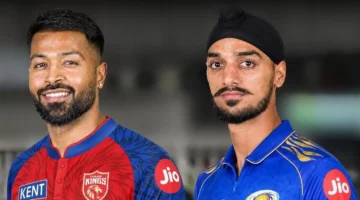
IPL 2027: Hardik Pandya vs Arshdeep Singh, Which Franchise Got the Better Deal?
The Hardik Pandya-Arshdeep Singh trade has created an interesting question ahead of IPL 2027: who…
India won the series in New Zealand, but how close are they to finding their perfect ODI side?
India won the series in New Zealand. So shouldn't they be leaving Tauranga with more…
USA Cricket Has Been Suspended Four Times. Can a New Board Finally End the Politics?
American cricket has a governance problem that refuses to go away. The United States of…
What’s Happening with Mohammed Siraj?
What's happening with Mohammed Siraj? That's a reasonable question to ask as India prepares for…
Brian Lara vs Sachin Tendulkar: Who Was the Greatest Test Batsman of All Time?
The debate over Brian Lara vs Sachin Tendulkar is one of the most fascinating discussions…