

Ben Stokes Can Return to the IPL in 2027, But Why Is Harry Brook Still Banned?
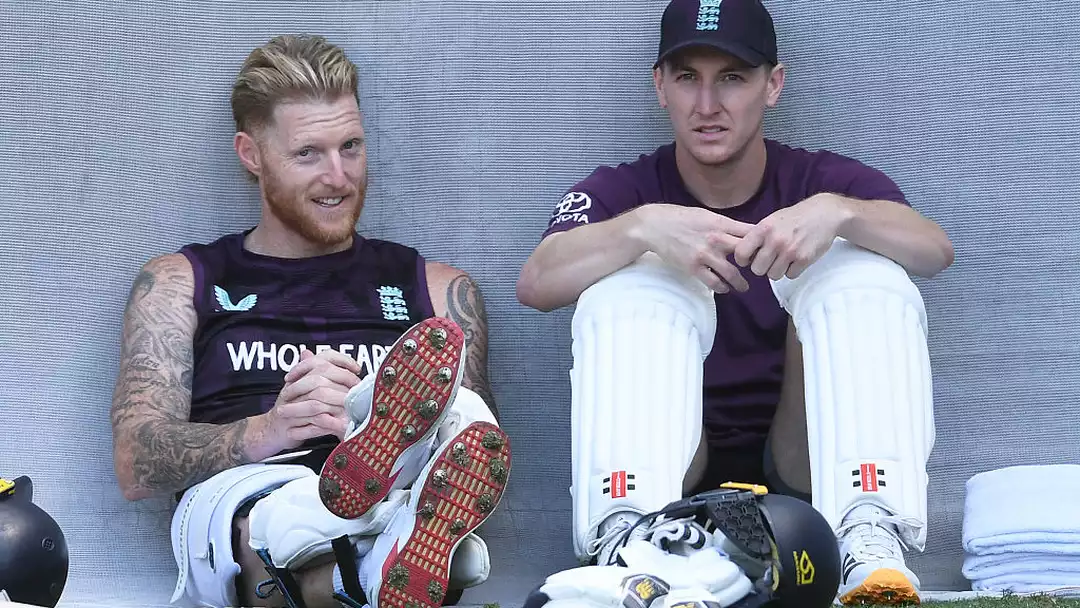
Ben Stokes can register for the IPL 2027 auction, but Harry Brook cannot. Why do two England players who have stayed away from the tournament face such different consequences?
Ben Stokes can return to the IPL auction in 2027. Harry Brook, his former England team-mate, cannot. At first glance, that might seem an odd distinction. Both players have stayed away from the IPL in recent years, and neither has been a regular presence in the tournament. But their circumstances are very different, and the BCCI’s regulations explain why one can make a comeback while the other remains ineligible.
The difference comes down to when and why they stayed away.
Stokes chose not to register for the 2025 IPL mega auction, prioritising his workload and England career. Brook, on the other hand, registered, secured a contract with Delhi Capitals and then withdrew before the season began. The BCCI treats those two situations differently, and the consequences are significant.
Stokes has served the restriction that followed his decision to skip the mega auction. Brook is still serving a two-season ban that will keep him out of the IPL until after the 2027 season.
So, how did the rules create such different outcomes for two high-profile England cricketers?
Two players, two different BCCI regulations
The BCCI has separate provisions for overseas players who skip a mega auction and those who withdraw after being bought by a franchise.
Stokes falls under the first category. The relevant regulation states:
“Any Overseas Player will have to register for the Big Auction. In case the overseas player doesn’t register, then he will be ineligible to register in the following year’s player auction.”
The wording is fairly straightforward. An overseas player who does not register for the mega auction becomes ineligible for the following year’s player auction.
Stokes did not register for the 2025 mega auction because he wanted to prioritise his workload and England commitments. As a result, he could not enter the 2026 mini-auction. He did not attempt to do so, and the restriction has now run its course.
There is nothing in this particular regulation that prevents him from registering for the 2027 auction.
That means the Ashes and World Cup winner, widely regarded as one of the most respected all-rounders in world cricket, can return to the IPL player pool without requiring any special exemption.
Brook’s situation is different.
The regulation covering players who withdraw after being selected at an auction is considerably stricter:
“Any player who registers in the player auction and after getting picked at the auction, makes himself unavailable before the start of the season, will get banned from participating in the tournament and player auction for 2 Seasons.”
Brook was bought by Delhi Capitals for INR 6.25 crore at the 2025 mega auction. However, he withdrew before the tournament began.
That decision triggered the two-season ban.
Consequently, Brook cannot participate in the IPL or register for another player auction until after the 2027 season. His position is particularly interesting because he is the No. 4 batter in the ICC rankings and one of the most destructive batters in T20 cricket.
It is not a question of his batting ability or his standing in international cricket. The restriction is a consequence of the circumstances surrounding his withdrawal.
Why did the BCCI introduce these restrictions?
The rules did not emerge without a reason.
The BCCI introduced them following growing concerns among IPL franchises about overseas players withdrawing after being bought at auctions, particularly when the contract value was lower than they had expected.
Before the mega auction, the board held a meeting with franchise owners in Mumbai. The franchises raised concerns about late withdrawals, arguing that they disrupted team planning and forced them to reconsider their combinations.
Think about what happens when a franchise spends money on a particular overseas player. It might have identified him as a first-choice option, planned its batting order around him or considered his availability essential to its bowling resources.
When that player withdraws shortly before the season, the franchise has to find a replacement, often with limited time and fewer suitable options.
The problem is not simply losing one player. It is the uncertainty that follows.
The BCCI’s regulations were intended to discourage this behaviour and provide franchises with greater certainty after the auction.
There is an important distinction here, though. The board has not treated every withdrawal in the same way. A player who does not register for a mega auction faces a one-auction restriction, while a player who registers, gets picked and then withdraws before the season faces a two-season ban.
Brook’s case falls squarely into the latter category.
Brook is not the first overseas player to withdraw
Brook is far from the first overseas cricketer to withdraw after being selected by an IPL franchise.
Jason Roy and Alex Hales have also pulled out after being picked at auctions. Mitchell Starc provides another example, although his circumstances involved workload management and the international calendar.
Starc withdrew from the 2017 season with Royal Challengers Bengaluru to manage his workload. He was also released by Kolkata Knight Riders ahead of the 2019 edition, a season in which the World Cup followed immediately after the IPL.
These examples highlight a recurring problem for the tournament.
The IPL occupies a demanding position in the international cricket calendar. Overseas players have national commitments, bilateral series, ICC tournaments and personal workload considerations to manage. For fast bowlers in particular, the physical demands of playing across formats can make the scheduling difficult.
Franchises, meanwhile, invest significant amounts in building squads and expect players to honour their commitments.
Neither side’s concerns are difficult to understand. But the BCCI has clearly decided that franchise planning needs stronger protection.
Wanindu Hasaranga’s complicated IPL journey
If there is one overseas player’s IPL history that illustrates how complicated availability can become, it is Wanindu Hasaranga.
His journey through different franchises and auction prices has been unusual.
Hasaranga played the 2022 and 2023 IPL seasons for Royal Challengers Bengaluru, earning a fee of INR 10.75 crore.
However, he missed the 2024 season through injury after Sunrisers Hyderabad bought him for INR 1.5 crore.
He returned to the competition in 2025, this time with Rajasthan Royals, who signed him for INR 5.25 crore.
After Rajasthan released him, Lucknow Super Giants secured his services for the 2026 season for INR 2 crore.
But Hasaranga never played for Super Giants, with a hamstring injury given as the reason.
Lucknow released him last week, and the Sri Lankan all-rounder has registered for the upcoming auction again, with a base price of INR 2 crore.
His situation is different from Brook’s. Hasaranga’s recent absences were attributed to injuries, rather than a withdrawal after being bought in the circumstances covered by Brook’s ban.
It also shows why availability remains such an important consideration when franchises assess overseas players. A player’s reputation and previous performances are only part of the equation. Whether he can actually take the field during the tournament matters just as much.
IPL 2027 auction: 1220 players on the initial registration list
While Stokes and Brook’s situations have attracted attention, the broader auction process is also moving forward.
The BCCI has confirmed that 1220 players feature on the initial registration list, as first reported by Cricbuzz.
Australia leads the overseas registrations with 53 players, followed by South Africa with 40. West Indies have 36 registrations, while New Zealand and Afghanistan have 25 and 23 respectively.
Associate Nations are also represented, with the USA contributing 13 registrations. The UAE and Nepal have 10 registrations each.
The numbers offer an early indication of the international interest in the auction, although registration does not guarantee that every player will make the final list.
The next step belongs to the franchises.
Teams will submit the names of players from the Auction Register whom they want considered for the final player pool. The BCCI will then release the final Auction List, along with the player sets, on Friday, 4 December 2026.
That list will provide a much clearer picture of which players are actually available for selection.
Stokes, Brook and the changing nature of IPL availability
The contrasting situations of Stokes and Brook raise a bigger question about the relationship between franchise cricket and international commitments.
For players operating across formats, deciding when to participate in the IPL is not always straightforward. Workload management, injuries, national team priorities and the timing of major tournaments can all influence those decisions.
Stokes chose to stay away from the 2025 mega auction to prioritise his England career. The regulation penalised that decision for one subsequent auction, but it did not prevent his return in 2027.
Brook’s decision came after he had already entered the auction and secured a contract. Delhi Capitals had committed INR 6.25 crore to him, only for him to withdraw before the season. Under the BCCI’s rules, that carries a much longer consequence.
From a franchise’s perspective, the distinction makes sense. A team can plan around a player who never enters the auction. It is considerably harder to plan around someone who gets selected and then becomes unavailable.
But does that make the system straightforward for every overseas player? Not necessarily. Injuries, international schedules and individual circumstances can create situations that are difficult to fit into a single set of regulations.
Stokes is now free to return to the auction pool, while Harry Brook must wait until after the 2027 season. Hasaranga, meanwhile, is preparing to enter another auction after two injury-affected seasons.
Three players, three different circumstances, and one tournament that continues to balance franchise expectations against the demands of international cricket.
The IPL wants the best overseas players available. Franchises want certainty after investing in them. Players want the freedom to manage their careers and physical condition.
Finding a balance between those interests is not easy. The BCCI has made its position clear through these regulations, but the circumstances surrounding overseas availability remain complicated. A lot depends on timing, commitments and decisions made long before the first ball is bowled.
And perhaps that is what makes the 2027 auction particularly interesting. Stokes can return, Brook cannot, and the final player pool, due on 4 December, will reveal who else has a realistic chance of joining them in the next IPL season.

Relevant news

Stokes Enters IPL Auction Two Years After Mega Auction Snub
Ben Stokes has entered his name for the 2027 IPL auction, two years after opting…
Auction Board Clears as Starc, Head and Bethell Make Way for 2027
The retention deadline brought clarity rather than sentiment on Tuesday, November 17, as Indian Premier…
Head Opts Out of IPL 2027 as Travishek Partnership Ends
Sunrisers Hyderabad's opening combination of Travis Head and Abhishek Sharma, the pairing known as Travishek,…
Dhoni Retires from IPL, Takes Mentor Role at Chennai Super Kings
MS Dhoni has officially ended his playing career in the Indian Premier League, transitioning to…
Shami and Curran at Centre of Multi-Player Trade Talks Between Royals and LSG
Rajasthan Royals and Lucknow Super Giants remain in discussions over a potential multi-player trade involving…
Wadia Joins Growing Calls for January IPL Window
Punjab Kings co-owner Ness Wadia has added his voice to the growing support for moving…