

The Decline of Traditional Strikers in FootBall
Soccer has always been about one thing above all else: scoring goals. Teams can pass well, defend deeply, and control the ball for long periods, but matches are decided by goals.
For decades, the player most responsible for that task was the traditional striker, often called the number nine.
This role was built around instinct, movement in the box, strength, and finishing. Over time, however, modern soccer has moved away from this profile, leading to a steady decline of the traditional striker.
How the Striker’s Role Changed
Throughout history, the role of a striker has always been determined by the team’s system. Previously, there were a lot of teams that played with two forwards or that relied heavily on one central target man for their attacks. That formation gave the strikers the advantage of staying on the last line of defense and playing their game of getting between the two centre-backs and receiving the ball just to finish from inside the box.
However, today’s systems want something else. Formations like 4-3-3 and 4-2-3-1 very often have the luxury of one forward who has to go deep, develop a play and create space for others. The outcome of this transformation is the appearance of the false nine, the position that draws the striker out of the penalty area into the midfield zones.
The Rise of the False Nine
The false nine became popular as teams searched for more flexibility and unpredictability. Under Pep Guardiola, this role helped reshape attacking play by turning the striker into a hybrid player who both creates and finishes chances. Instead of waiting in the box, the forward becomes part of the midfield structure.
Players in this role are judged less on pure finishing and more on technical skill, pressing, and tactical awareness. This has pushed traditional poachers to the margins, as managers increasingly prefer players who can do many things rather than one thing extremely well.
Fewer Systems for Classic Number Nines
Another major factor in the decline is the reduced use of formations that support traditional strikers. The 4-4-2 system once allowed two forwards to work together, share physical battles, and focus on attacking the box. This setup made full use of a striker’s strength, positioning, and finishing instincts.
As teams moved toward single-striker systems, the space and support for these players disappeared. The modern striker often becomes isolated, touching the ball less and spending more time linking play than attacking goal. This change has made the role less attractive and less productive for natural finishers.
England’s Striker Shortage
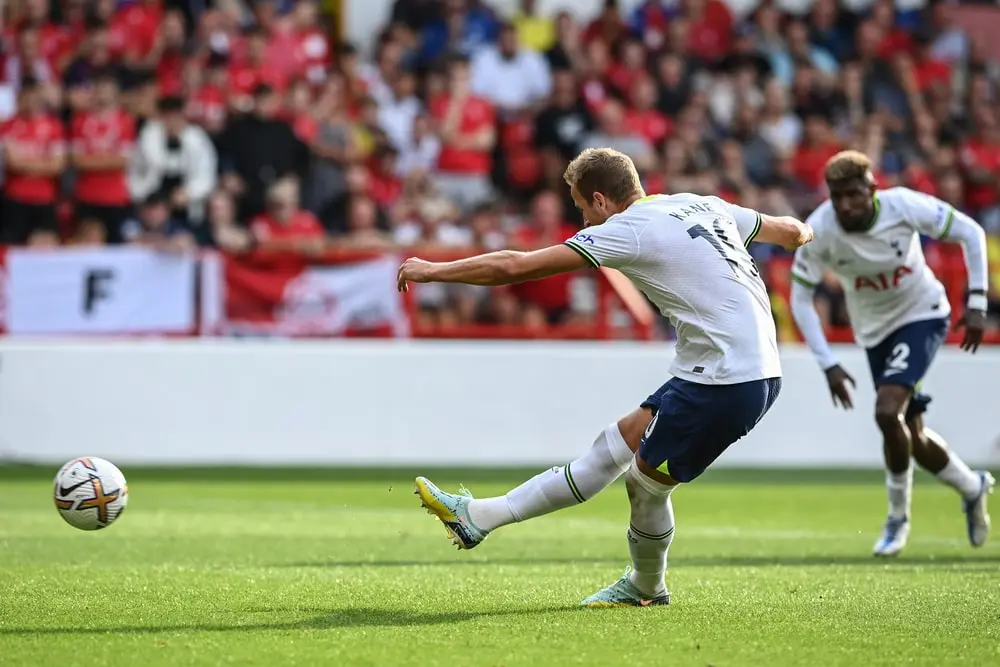
The fall of classic strikers is particularly noticeable in England. On the international scene, Harry Kane is a bright spot and the only plain and proper number nine in the team right now. The situation points to the fact that the versatile forwards can take up the position as needed but the lack of depth behind him is evident.
This trend is supported by numbers. Nowadays, English strikers in the Premier League net by far fewer goals than their counterparts in the 1990s scored. The latter saw a number of English forwards hitting the symbolic double-figure mark regularly during the season. In contrast, only a few do so now and even they are not consistent in their scoring.
Players from the past mention shorter playing time, tactical evolution, and tougher rivalry from foreign strikers as the main causes. With lesser number of clubs applying the two-striker system and with more focus on wide and hybrid positions, the young English forwards are not able to grow as classic center-forwards.
Changing Coaching and Youth Development
Coaching at youth level has also contributed to this scenario. The current generation of players is being trained to be multifaceted, ball-skilled, and capable of adapting to any position. This will lead to the overall pool of players being more technically competent, but, unfortunately, the striker hunch in the players who are specialized in scoring will be the one to suffer.
Legends like Alan Shearer are of the opinion that young attackers stay away from the central position because they get less touching of the ball and less involvement. They rather want to play in the wide or attacking midfield positions where they can have more ball contact and more freedom of movement.
Are Traditional Strikers Still Valuable?
On the other hand, classic strikers have not been entirely wiped out. The case of Erling Haaland illustrates that a typical number nine can become a superstar in the present day football. His skills in movement, positioning, and finishing reinforce the idea that this role could be very fruitful when the necessary system supports it.
Traditional strikers, by their nature, still have the hold-up play as one of the main assets. They let the attackers in the midfield take up the space by turning and playing with their backs to the goal they are defending. False nines support play as well, but the traditional center forward does it under more pressure and closer to the goal.

Relevant news

The Yanks on the Global Stage: A Deep Dive into the USMNT Competitive Record
If you’ve been following the United States Men's National Team (USMNT) through the highs of…

How UEFA’s New Financial Sustainability Regulations Regulate Club Spending
If you’ve ever loaded up a Career Mode save on "Strict" financial settings or tried…

The Ultimate List of All-Time Champions League Top Scorers | Ronaldo, Messi & Lewandowski
When you talk about the UEFA Champions League, you’re talking about the absolute peak of…
FIFA World Cup: 5 Underdog Teams That Shocked The World
The FIFA World Cup always brings unexpected outcomes. The tournament sees two teams from each…

Top 5 Biggest Upsets in FIFA World Cup History
The FIFA World Cup has offered countless memorable moments, from incredible players to goals that…

5 Youngest Players Who Have Won the UEFA Champions League
Winning the UEFA Champions League is difficult at any age. Doing it as a teenager…