

Abhishek and Sooryavanshi Rewrite the Terms of Engagement in Wellington
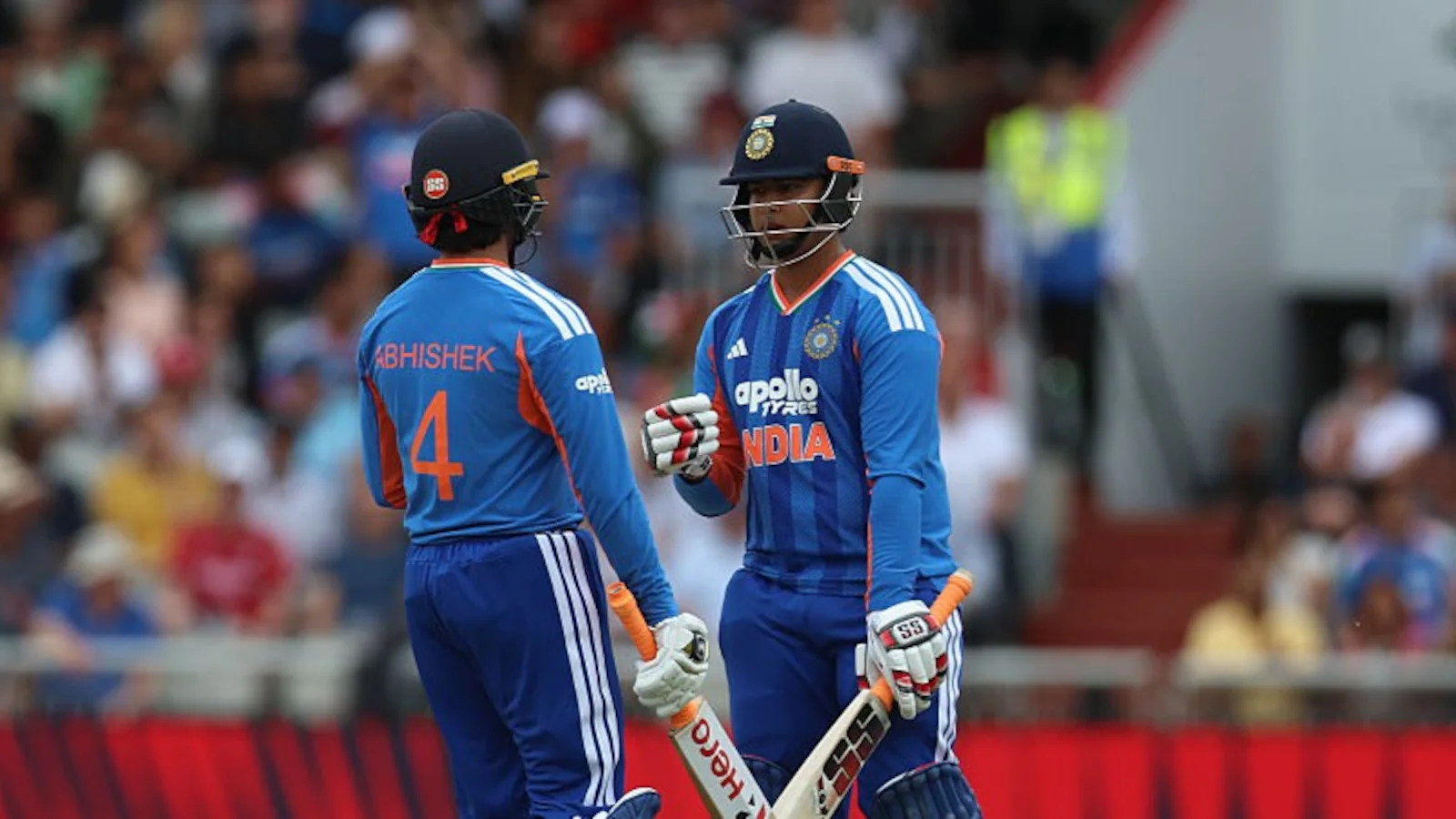
Wellington: There are chases that require calculation, and there are chases that render calculation irrelevant. India’s pursuit of 199 at the Sky Stadium on Tuesday belonged firmly in the second category, completed in 13.2 overs with six wickets in hand and a series victory secured with two matches still to play.
1⃣1⃣3⃣ runs
3⃣8⃣ balls
2⃣9⃣7⃣.3⃣7⃣ strike rate
9⃣ fours & 1⃣1⃣ sixesAbhishek Sharma, take a bow for that astonishing innings 🙇♂️
Updates ▶️ https://t.co/zf4CnZQ8CD
#TeamIndia | #NZvIND https://t.co/RxygJwIOUw
— BCCI (@BCCI) October 27, 2026
The precedent exists, though it hardly fits. Netherlands chased down 190 against Ireland in 13.5 overs at the 2014 T20 World Cup, a feat driven by a specific net-run-rate requirement. India’s effort carried no such imperative. This is simply how they bat.
A Powerplay Without Precedent
Abhishek Sharma reached his fifty in 15 balls. His fourth T20I hundred arrived in 35. Along the way he achieved something even more notable, upstaging Vaibhav Sooryavanshi in an opening stand of 133 that consumed just 7.1 overs.
The pair took India to a T20I record 118 for no loss in the powerplay. During that passage, the lines and lengths New Zealand attempted ceased to carry consequence. Abhishek finished with 113, Sooryavanshi with 45, and the contest was effectively settled before the fielding side had time to adjust.
What made the innings distinctive was not merely the rate of scoring but the pressure it imposed before a ball was bowled. When Abhishek and Sooryavanshi are at the crease, the bowler’s choice of delivery is already shaped by the awareness of what these batters can do, where they can move in the crease and where they can hit. On Tuesday, no choice worked.
New Zealand’s Earlier Control
The first half of the match had told a different story. India’s fast bowlers used the exaggerated oval dimensions of the ground, with its long straight boundaries and short square ones, to contain New Zealand. Bowling full and straight, they generated reverse swing and restricted the hosts to 198 for 3.
Daryl Mitchell anchored the innings with an unbeaten 89, while Finn Allen contributed 40. Kyle Jamieson later claimed 2 for 45, but the effort proved academic once India’s openers began their assault.
New Zealand had reason to believe 198 might be competitive. On a ground where the straight boundaries demand precision and the square ones reward discipline, the total appeared defensible. India’s response removed that assumption within seven overs.
A Series Decided Early
The victory gives India an unassailable lead in the five-match series. For New Zealand, the challenge now is analytical as much as competitive. Containing an opening pair that scores at more than 18 runs per over during the powerplay requires either a fundamental rethink of plans or an acceptance that some days cannot be defended against.
For India, the performance reinforces a template that has become familiar. Abhishek’s century, his fourth in T20I cricket, arrived at a strike rate that places him among the format’s most destructive practitioners. Sooryavanshi’s supporting role, played at a tempo that would ordinarily command headlines, underscored the depth of the batting at India’s disposal.
The remaining two matches will be played, and New Zealand will seek a response. But the series itself has been decided, and it was decided by an opening partnership that treated a target of 199 as a formality rather than a challenge.

Relevant news

Ferguson Ruled Out as New Zealand’s Injury Woes Deepen
Auckland: New Zealand's preparations for the fourth T20I against India have been disrupted once more,…

Mushfiqur Sidelined for Series Opener as Bangladesh Begin Final WTC Push
Dhaka: Bangladesh will begin their first Test against West Indies without Mushfiqur Rahim, after the…

Anderson Moves Into Ownership as Lancashire Exit Leaves Playing Future Unclear
James Anderson has been announced as co-owner of the Napoli Knights, one of the franchises…

Ahmadzai’s Counterattacking Fifty Sets Up Afghanistan’s Comfortable Win
Sharjah: On a pitch that made scoring look like hard labour, Ijaz Ahmad Ahmadzai batted…

Moliya’s Unbeaten 321 Sets Baroda Record in Ranji Trophy
Vadodara: Priyanshu Moliya produced an innings of rare scale and concentration at the Reliance Cricket…
Smith Ruled Out as Australia Ring the Changes for Cape Town Decider
Cape Town: Australia's attempt to salvage the series against South Africa has been dealt a…