

Fog, Failure & Flawed Planning: Why BCCI’s December Match in Lucknow Sparked Major Controversy?
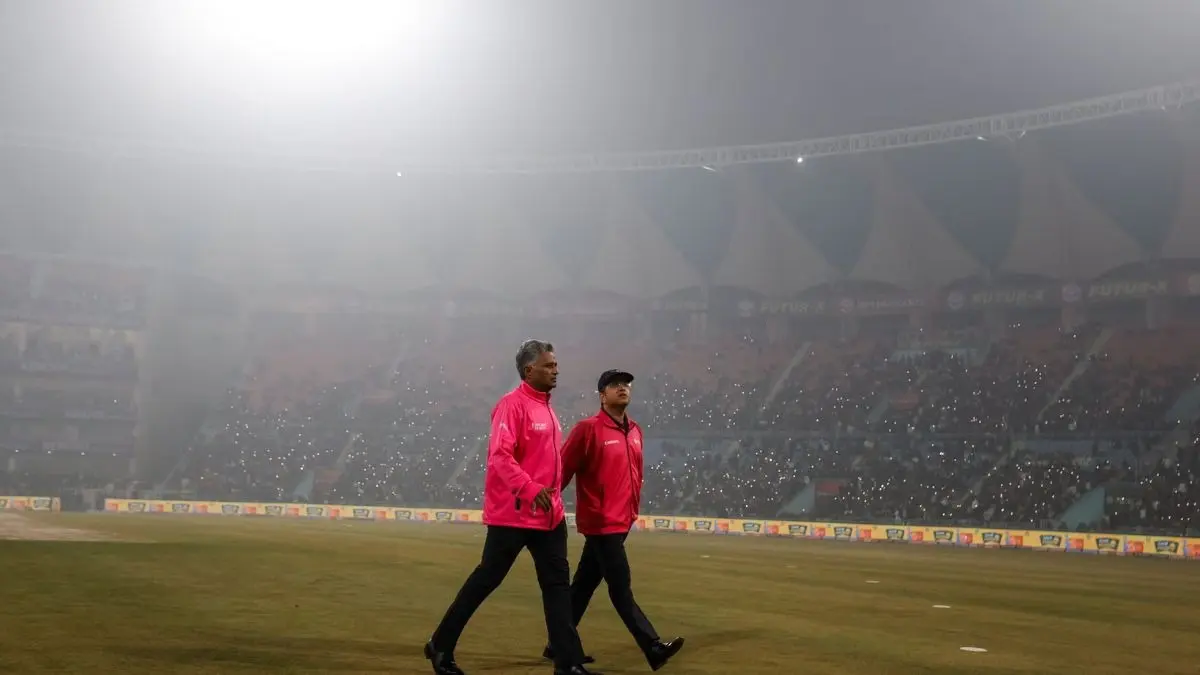
The fourth T20 match between India and South Africa was abandoned without a single ball being bowled due to dense fog, raising serious questions about the BCCI’s scheduling policy. This was not just the loss of one match, but a decision that has once again highlighted flaws in venue planning during North India’s winter season.
The match was scheduled in Lucknow in December, a period well known for severe fog and low visibility. Despite weather warnings and past experiences, the game was allotted to a venue where winter fog is a recurring issue, making uninterrupted night matches highly uncertain.
Cricket officials and experts believe this situation was completely avoidable. India has several stadiums in regions where winter fog is minimal, yet matches continue to be scheduled in northern cities during peak fog season. The decision to host a crucial T20 international at Lucknow has therefore drawn criticism from former players, analysts, and fans alike.
The umpires and match officials conducted multiple inspections, but visibility levels never improved enough to begin play. Eventually, after prolonged delays, the match was called off, leaving both teams and spectators disappointed. Fans who had filled the stadium were forced to return without witnessing any cricket action.
This washout has also impacted the competitive balance of the series, as the abandoned match reduced playing opportunities and disrupted momentum. Broadcasters and sponsors suffered losses, while players were denied valuable match time ahead of future international assignments.
Experts argue that the BCCI must rethink its winter scheduling strategy, especially for evening matches. December in North India is traditionally affected by fog, smog, and cold weather, making it unsuitable for night cricket. Scheduling matches in western or southern venues could significantly reduce such disruptions.
The article further notes that this is not the first time an international match in North India has been affected by fog, yet lessons appear to remain unlearned. Questions are now being raised about accountability and whether logistical convenience is being prioritised over cricketing sense.
In conclusion, the abandoned Lucknow T20 has reignited the debate on poor planning, weather ignorance, and avoidable losses in Indian cricket administration. If corrective steps are not taken, such incidents may continue to tarnish the quality and credibility of international fixtures hosted in India.

Relevant news

Caught Red-Handed: School Escapes Go Viral at India-New Zealand Test
On the final day of a Test match that had long since settled into a…

New Zealand Bat Out Final Day to Deny India in Wellington
Wellington: New Zealand produced the kind of rear-guard resistance that defines a Test match saved…

Gambhir’s Call That Silenced the Noise Around Sarfaraz Khan
Dressing room leaks are the currency of cricket's rumour economy. They arrive without evidence, spread…

Pakistan Hold Off Tilak’s Century to Seal 48-Run Win
A fired-up Pakistan attack brought down a star-studded India batting line-up in a high-intensity Asia…

Zadran and Wiese Deliver Giants Win as Knight Riders Make Statement
Sharjah: Ibrahim Zadran's 84 and David Wiese's frugal spell of 2 for 16 proved the…

Saqib Ruled Out in Rawalpindi as Pakistan’s Four-Man Attack Feels the Strain
Pakistan's second Test against Sri Lanka has been complicated by the loss of fast bowler…